

Why these countries are so geographically vulnerable
The Sahel is already a challenging place to live and it's not getting easier

Last Friday asked a very interesting question: do you feel geographically safe? And a number of you responded with all kinds of interesting answers. But broadly, I think I can summarize them as “no.” Which isn’t really a surprise to me, to be honest. In our hyper-connected and hyper-sensationalized news media world, it can feel like being safe from anything is impossible. But geographically, it’s also a challenge.
And so, because this was top of mind, and I also released a video about the geographic problems looming for Pakistan yesterday, I’ve been thinking more broadly about the question. And as I was thinking about which regions are geographically safe versus those that are not: one region kept coming up as the absolute most challenging region to live in with respects to the natural geography: the Sahel.
But first let’s establish the basics:
What and where is the Sahel?
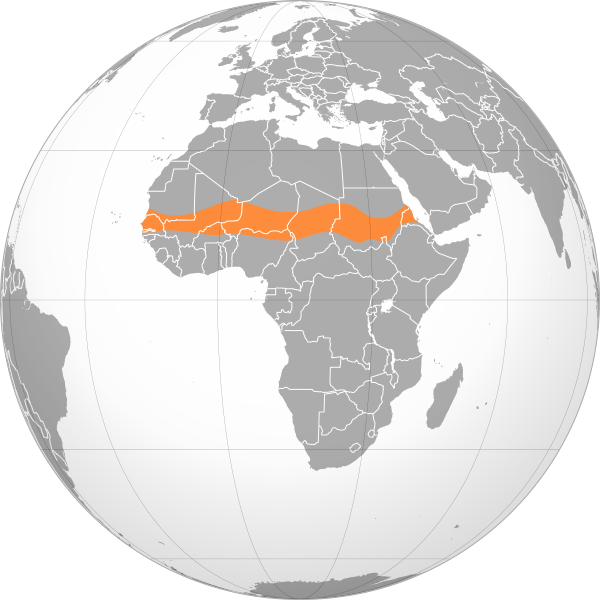
If you want to understand the Sahel, you first have to look at its name. Which, unless you’re super into geographic regions, may very well be someplace you’ve never heard of before. It’s relatively obscure because, well, it’s pretty empty overall. Anyways, back to the name:
Derived from the Arabic word sāḥil, meaning “coast” or “shore,” the Sahel’s name might initially be a little confusing because this is a huge tract of dry, inland arid desert. And while, depending on where you draw your boundaries, the Sahel does indeed have a coast with both the Atlantic Ocean in the west and the Red Sea in the east. Sometimes maps don’t include the coast, sometimes they do. I don’t know the details. Regardless, those two relatively tiny coastlines are not the reason for the name. No, it’s because the Sahel runs right up against the Sahara Desert, the the “coast” is in reference to the ocean of sand bordering the region to the north. Simple right?
Geographically, of course, the Sahel is a sprawling ecoregion and transition zone in northern-ish Africa. It essentially acts as the great divide between the hyper-arid expanse of the Sahara Desert to the north and the lush, tropical Sudanian savannas to the south. Stretching roughly 3,860 miles (5,400 kilometers) across the widest part of the African continent, it forms a continuous belt from the Atlantic Ocean in the west to the Red Sea in the east (again, sometimes, ugh).
All this is to say, this is a land of extremes. The landscape is pretty flat with barren plains, scattered thorny shrubs, and resilient baobab trees (very cool looking!). It experiences an eight- to nine-month dry season, followed by a brief, highly unpredictable rainy season. And while the Sahel is not quite a desert, it is constantly flirting with becoming one, making it an incredibly precarious place for the ecosystems—and the millions of people—that call it home.
From west to east, the core countries that make up the Sahel include:
Senegal
The Gambia
Mauritania
Mali
Burkina Faso
Niger
Nigeria (the extreme northern region)
Chad
Sudan
Eritrea
While other neighboring countries (like Cameroon or the Central African Republic) occasionally fall into broader definitions of the region, the countries above are the ones whose destinies, economies, and political realities are most intimately tied to the harsh conditions of this transitional zone. Maybe The Gambia doesn’t fall in there though because its whole economic and geographic destiny is tied to The Gambia River… Hmmm I’ll have to think on that one.
Why the Sahel defies stability
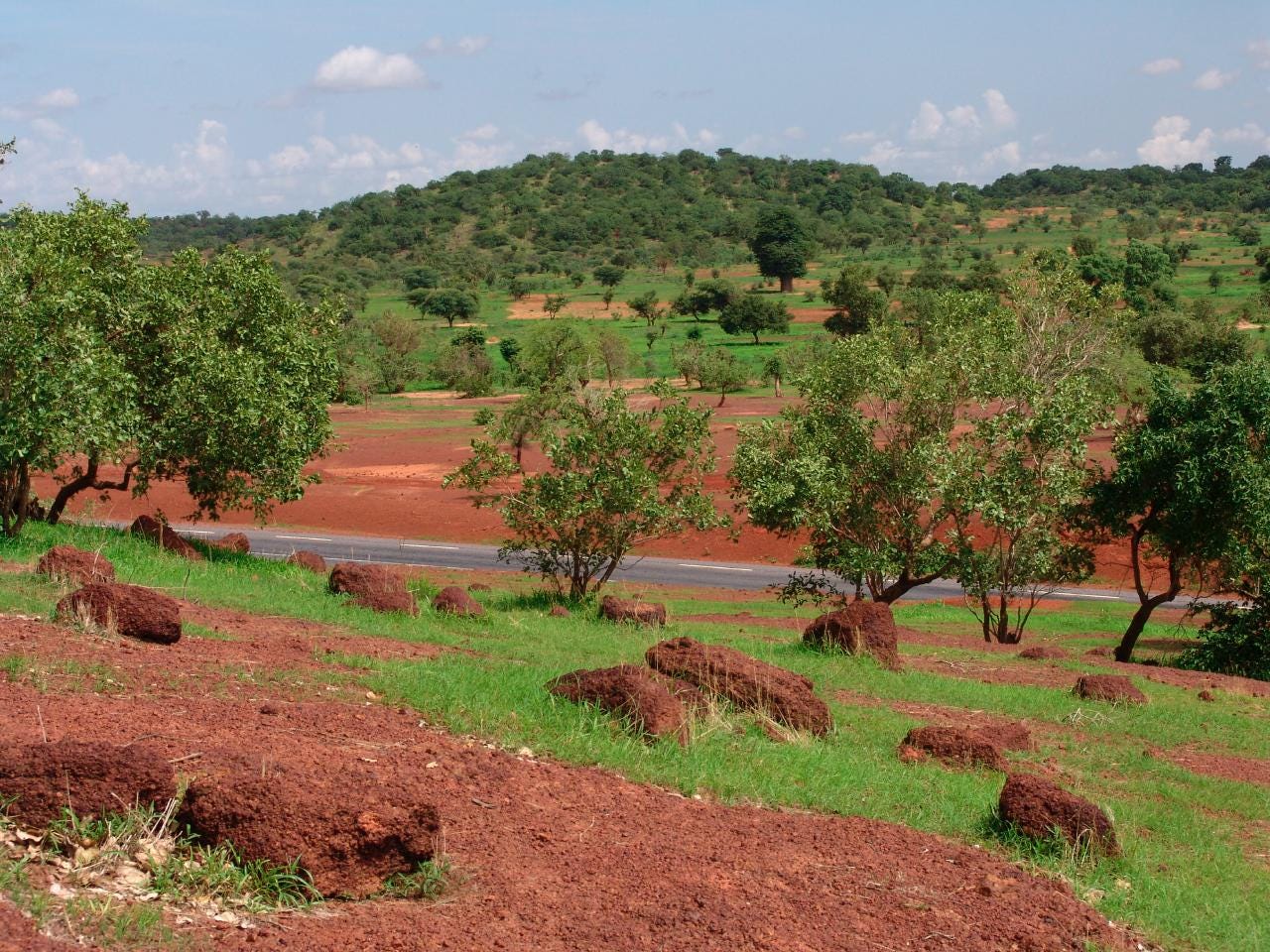
To say the Sahel is a challenging place to live is an incredible understatement. It’s arguably the most geographically vulnerable region on the planet. The very nature of the land fundamentally undermines the basic building blocks of a stable nation-state.
But let’s break it down specifically. Here’s why geography makes governance and survival so extraordinarily difficult in the Sahel:
The climate is a threat multiplier
The Sahel is warming 1.5 times faster than the global average. It suffers from severe, cyclical droughts, unpredictable rainfall, and rapid desertification. Because over 80% of the population relies on rain-fed agriculture and pastoralism (livestock herding) to survive, a bad rainy season doesn’t just mean a poor harvest, it means widespread famine. There is virtually no economic safety net because the environment simply can’t consistently support one.
Lethal resource competition
And so, in a region where arable land and water are vanishing, competition for those same resources turns deadly. For centuries, nomadic herders and sedentary farmers coexisted through symbiotic relationships. Today, as the desert encroaches south, herders are forced onto agricultural lands to find pasture and water. This geographic squeeze has ignited hyper-local, violent conflicts between communities, which destabilize entire provinces.
Everything is SO far away
But also, Sahelian countries are massive. Like way bigger than the map suggests. Mali and Niger are each roughly twice the size of Texas or France. Yet, the harsh terrain makes building roads, power grids, or communication networks incredibly expensive and logistically nightmarish. When a central government in a capital city can’t physically reach its peripheral populations to provide schools, hospitals, or security, the social contract naturally breaks down. After all, if you got no services from a government thousands of miles away, wouldn’t you stop being loyal to it as well?
Ungovernable spaces
Finally, this state weakness creates a power vacuum, and geography provides the perfect cover. The vast, empty, and porous borders of the Sahel are impossible to police even for militaries. This makes the region a haven for militant insurgencies, terrorist organizations (infamously Boko Haram), and transnational smuggling rings (moving weapons, drugs, and human beings). These groups exploit the harsh geography to hide, operate, and recruit from impoverished, disenfranchised populations who feel abandoned by their distant governments.
There are, of course, plenty of very challenging regions of the world to live in. I believe the Philippines is largely considered to be the most natural disaster prone country on the planet. And of course southwest and central Asia are not looking so hot these days either. It’s why I made a whole video about Pakistan, after all. But regardless, the Sahel still stands as a region with just not a whole lot of options for progress. The natural geography of it is such an impediment.
Also, you’ll note that I didn’t really discuss the Sudan Civil War that is currently still going on. This was intentional. While I believe the physical geography is certainly a cause for why the civil war is happening, it’s certainly not the only or one of the major causes. And it reference it in this article which is largely about the challenging geography would feel tacky, at best. I only mention it here so that you know that it is something that crossed my mind. I didn’t forget about it.