


This week in the United States (and Canada!) marks the cultural end of summer. While actual summer continues on through September 20th, Labor Day is often thought of as when things return to normal. Kids go back to school, vacations are either shorter or non-existent until the holidays. And so on and so forth. But while it’s all very sad to see summer leave us once again — it’s actually raining in Portland as I write this — what I find more interesting is the fact that the United States celebrates Labor Day at all as opposed to the much more internationally recognized May Day which occurs on May 1st.
The origins of Labor Day
The inception of Labor Day can be traced back to the late 19th century, a time characterized by the rise of industrialization. Workers often faced extremely poor working conditions, with twelve-hour workdays, unsafe environments, and lack of basic rights. The labor unions started organizing strikes and rallies to protest these conditions.
One of the first Labor Day celebrations was held on September 5, 1882, in New York City. Organized by the Central Labor Union, the event consisted of a parade and a picnic. The idea quickly gained traction, and many states began adopting the holiday before it became federal law. In 1894, President Grover Cleveland signed a bill into law making Labor Day a national holiday.
For most Americans today, Labor Day is associated with barbecues, parades, and end-of-summer parties. However, its essence is still rooted in the struggles and achievements of workers. It serves as a yearly national tribute to the contributions workers have made to the strength, prosperity, and well-being of the country. The holiday also coincides with back-to-school sales and activities, adding another layer of cultural significance as a transitional period between seasons and an emblematic farewell to summer.
Unfortunately, and a bit ironically, the holiday today has also become associated with shopping. Which means those that work in retail or service often do not get the day off from work, but are instead expected to perform during a highly stressful day where other, mostly white-collar workers are trying to get the best deals. Which begs the question: if not for laborers, who is Labor Day actually for? It’s for this reason that there’s been a rise in recognition of May Day within the United States, even if its unofficial and not a day off.
What is May Day?
May Day, celebrated annually on May 1st, is a holiday known worldwide as International Workers' Day. It's a day dedicated to honoring laborers and the working class, a time marked by protests, rallies, and celebrations advocating for labor rights. While the United States notably abstains from celebrating May Day as a national holiday, opting instead for Labor Day in September, much of the rest of the world engages in various activities to recognize the significance of workers and labor movements.
One of the key issues that May Day brings into focus is the "eight-hour day" movement. This labor union movement advocated for a workday that actually ended. Their actual argument was "eight hours for work, eight hours for recreation, and eight hours for rest." Pretty reasonable, right? The idea was to bring attention to the unfair and often harsh working conditions laborers faced during the era of rapid industrialization.
Today, May Day is celebrated differently across the world. In many countries, it's a public holiday filled with marches, protests, and gatherings focused on labor rights, economic issues, and social justice. Other countries might host concerts, festivals, and parades to honor their workers. In some cultures, May Day also coincides with traditional spring festivals, bringing an additional layer of cultural significance to the day.
So why doesn’t the U.S. observe May Day?
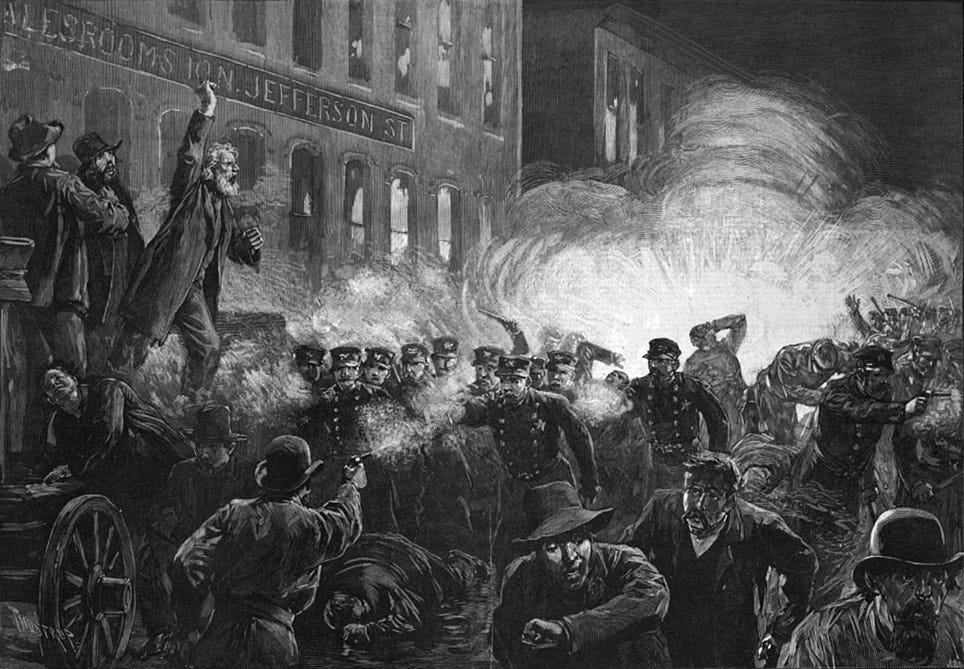
While much of the world marks May 1st as International Workers' Day or May Day, the United States stands as a noticeable exception. Instead, Americans celebrate Labor Day on the first Monday of September. This divergence from the world begs the question: why does a country with a rich history of labor activism, not observe May Day like many other countries?
Ironically, one of the most critical events that inspired the international celebration of May Day—the Haymarket affair—occurred in the United States. On May 4, 1886, in Chicago, a peaceful rally in support of workers striking for an eight-hour workday turned tragic when a bomb was thrown at the police. The bomb, followed by gunfire, resulted in the death of several police officers and civilians. This incident severely tainted the image of labor movements and led to a crackdown on labor activists. The event became stigmatized, and instead of becoming a rallying point for American labor rights, it became a cautionary tale.
The Cold War era further complicated matters for May Day in the United States. May Day was often associated with socialist and communist ideologies and was a significant event in the Soviet Union, complete with massive parades showcasing military strength. Given the U.S.' anti-communist stance during the Cold War, aligning with a holiday that had communist connotations was politically and culturally unacceptable during the time.
In contrast to the unfortunate events associated with May Day, Labor Day had a more pacifistic and universally acceptable origin. The first Labor Day celebration took place in New York City on September 5, 1882, organized by the Central Labor Union. It was seen as a "workingmen’s holiday" and was less politically charged than May Day. Given its more moderate origins and the pressing need to distance from the radical connotations of May Day, Labor Day became the preferred holiday for celebrating labor rights in the United States.
Over the years, Labor Day has evolved to fit the cultural ethos of America. It not only marks the contributions of laborers but also signifies the end of summer and the beginning of the school year for many. This cultural resonance has helped solidify its place in American society, further sidelining the relevance of May Day.
—
If you're interested in further discussions like this, exploring topics that intersect with human experience, culture, and society, make sure to check out our podcast where we delve into subjects such asthis in greater detail. In particular we have an episode coming up on the geography of Halloween! Spooky season is right around the corner after all. 👻
You kind of glossed over why there was a bomb at Haymarket to begin with. It was because of police brutality. There was a general nation-wide strike for the 8 hour workday, called by labour unions, which began on May 1. By the 3rd of May, 1886, strikers in Chicago confronted some scabs, which provoked the police to shoot at strikers, injuring many and killing two. Local organizers sought a rally the next day to protest against the brutality. Police showed up, again, and began trying to disperse the crowd, and a bomb went off in the crowd. I think it's important to not just leave big details like this hanging. The bomb didn't just happen because of some emboldened protesters, they were an (admittedly not good) reaction to the police and their violence against workers.
Labor Day may be on a different date in the US and Canada than in most other countries, but other exceptions abound. In Australia, various states have Labour Day or similar days on different dates throughout the year (mainly in March and October), though in Queensland and the Northern Territory it's on the first Monday in May (just like in the UK), which isn't necessarily on May 1 per se; in New Zealand it's on the fourth Monday of October. In each of Jamaica, the Bahamas, and Trinidad & Tobago, it's in late May or June. In Japan, while many trade unions do observe Labor Day on May 1, there's a more widely observed day called Labor Thanksgiving Day, which is on November 23. For more, check out https://en.wikipedia.org/wiki/Labour_Day.