


Sorry for the delay in this week’s article. I was traveling on a train over the last two days and internet was spotty to say the least. The normal article time of Wednesday mornings won’t be changing.
Did you know that, in the mountains of Central Appalachia, you can still hear the hum of the coal industry? It’s growing fainter of course, but it’s certainly still there. It’s the sounds of a half-empty coal train crossing a trestle bridge in Mingo County, or the localized cough of a miner who started working the seam at eighteen and is now fighting for breath at fifty. And this is weird because… coal as a viable power source should be long gone and buried by now. In fact, for decades, economists, environmentalists, and politicians have written coal’s obituary.
The data is irrefutable: since 2008, U.S. coal production has plummeted, and the number of miners in Appalachia has dropped by over 50%. Renewable energy such as solar and wind power are cheaper and provide more energy. Natural gas is simply more abundant. Even nuclear energy, despite its heinous cost, is expected to rise over the coming decades due to newer reactors that are smaller and cheaper to build. Basically, the “War on Coal” is technically over and the market won.
And yet, coal refuses to fully die. So what’s going on? Why won’t this very dirty form of energy finally go if there are much better technologies available?
A zombie economy

Unfortunately the economic engine that is coal has been incredibly hard to break. In counties across West Virginia and eastern Kentucky, the local government is addicted to coal. Through severance taxes (a tax levied on the extraction of non-renewable resources) coal has historically funded everything from road pavement to teacher salaries. In some counties, coal-related revenue still accounts for a third of the local budget.
Side note: this is not so different from Alaska and oil. But the big difference here is that oil is still very much a viable (even if incredibly harmful) fuel source.
This creates a “Zombie Economy.” The industry is basically dead (bankruptcies are quite common and profit margins are razor-thin) but the local infrastructure is so terrified of the withdrawal symptoms that they keep the industry on life support. Local politicians fight for coal not necessarily because they believe in its long-term viability, but because they have no idea how to pay for anything without it.
And while the federal government has tried to intervene through initiatives like the POWER grant program that pump millions into “economic diversification”, you can’t replace a century of economic mono-culture overnight. Tourism jobs (often the go-to for economic diversification) often pay minimum wage. But coal jobs, even now, can pay $80,000 per year. For a family in West Virginia with a mortgage, an auto loan, children to feed, and just normal daily expenses, the “green transition” looks less like a promise and more like a pay cut.
The physical toll of coal
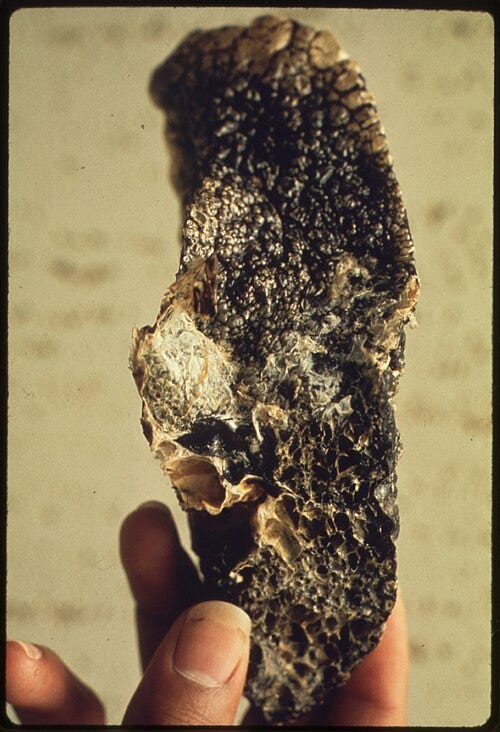
While the economics of coal are zombie-like, the physical toll on people is terrifyingly alive. In fact, we are currently witnessing a resurgence of the “Black Lung” disease that shouldn’t be happening in the 21st century. It’s kind of crazy actually.
For those who don’t know black lung disease is an type of pneumoconiosis caused by inhaling coal dust into the lungs and the lung tissue’s reaction to its presence. It literally turns lungs black.
But while things like PPE have gotten better, modern mining in Appalachia is scraping the bottom of the barrel. The thick, easy-to-reach seams are gone. Miners are now cutting through more rock to get to thinner bands of coal. And this rock contains silica, which is far more toxic to the lungs than coal dust alone. The result? A wave of “progressive massive fibrosis” (the most severe form of black lung) in miners as young as their 30s and 40s.
This is the grim reality of the region’s loyalty to coal. The industry is literally scarring the lungs of the workforce, yet that same workforce fiercely defends the industry against “outsiders” who want to shut it down. Why? Because in a place where opportunity has dried up, danger is often preferable to irrelevance or even worse, bankruptcy.
The identity of coal
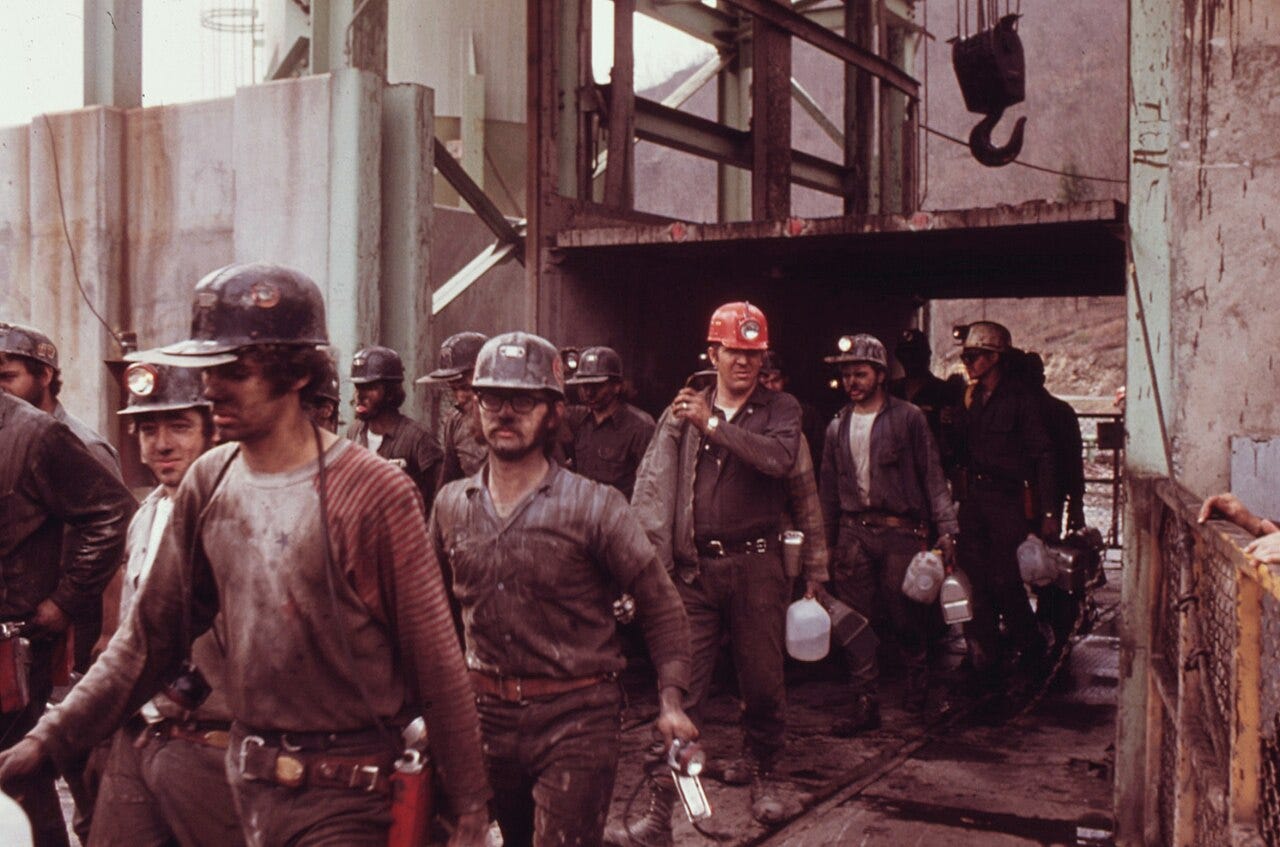
But ultimately, coal refuses to die because it has successfully embedded itself into the cultural DNA of the entire Appalachian region.
For a hundred years, the company town wasn’t just an economic arrangement, it was a total social system. The “Coal Miner” became the regional archetype of masculinity, sacrifice, and provision. He kept the lights on in America. He fueled the tanks that won WWII. He was manly, strong, rough, and all the other things that television and movies have portrayed coal miners as. Despite the health impacts, being a coal miner was almost glorified.
So when you tell Appalachia that coal is “dirty” or “outdated,” you aren’t just critiquing a source of energy. You’re telling a community that their history (their fathers’ broken backs, their grandfathers’ early deaths) was for nothing.
This creates a “cultural stickiness.” The region clings to coal not because they love the coal dust, but because they fear the void that comes after. The alternatives offered by the modern rural economy (hello Dollar General!) lack the dignity of the mine. Until the post-coal future offers not just a paycheck, but a sense of purpose and pride, coal won’t be going anywhere. You can see similar identities in the loggers of the Pacific Northwest, or the fisherman in New England. Because, after all, who are we if not our identity?
And so, Appalachia is currently living in the “long twilight” of the fossil fuel age. The mines will not close all at once. They will flicker out, one by one, as the seam runs dry or the export market shifts.
The challenge for the rest of the country is to stop looking at Appalachia with scorn or pity, and start looking at the bill. We built a nation on the cheap energy extracted from these mountains. The refusal of coal to die is, in many ways, a measure of our failure to offer a life after the death of coal.
Excellent piece. The identity argument is the most underappreciated part of the coal story.
From the investment side, I'd note that this same "refusal to die" dynamic plays out globally — seaborne coal demand from Asia keeps hitting new highs even as Western markets retreat. The energy transition is far less linear than most people assume. I explore these kinds of supply-demand disconnects in energy and commodity markets .
Basically, it's a buggy whip industry in 2026. However small the profits are, there is nothing to replace it and the identity is generations deep. Excellent analysis - most people never think of identity and culture, but it matters tremendously.