


Canada owns a lot of islands. Far more than I think you would ever guess. Even if you did know something about Canadian geography, I’d wager you would still be way off. In total, Canada owns a little more than 52,000 islands! But while many of these islands are small coastal islands, Canada is also home to a wide range of really large islands in the arctic called the Canadian arctic archipelago. And this is interesting to me because typically when we think of an island, we conjure up images of a tropical paradise of some sort, but these islands are the literal polar opposite. So what does Canada do with its arctic archipelago?
The Canadian arctic
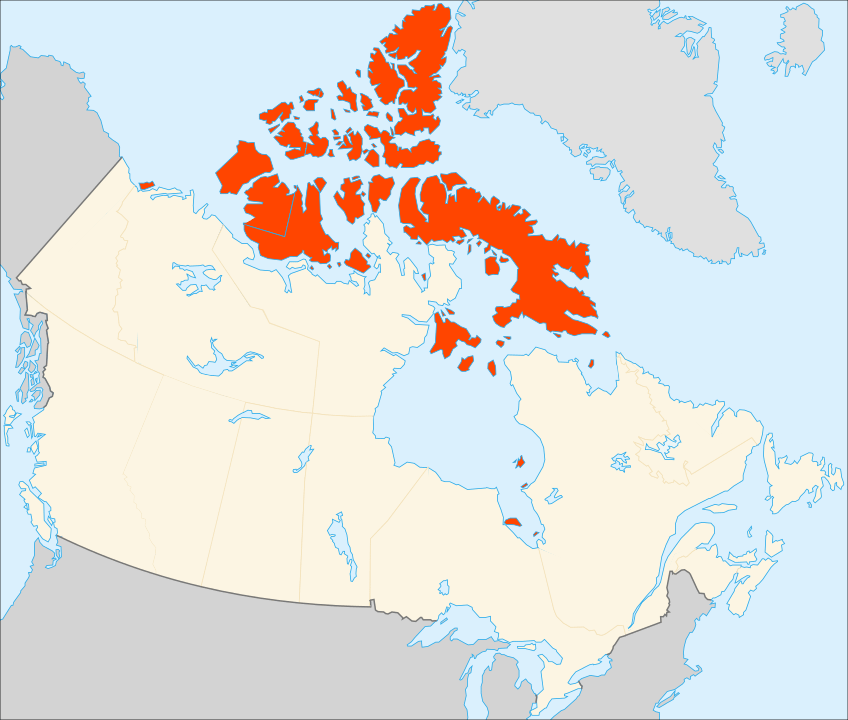
When I’m referencing the Canadian arctic I’m really referring to all of the islands that exist north of the mainland. This would include Baffin Island, the really big one just north of the Hudson Bay, Victoria Island, Ellesmere Island, and all of the other islands that broadly make up what are named the Queen Elizabeth Islands. Astute geographers and perhaps Canadians, will recognize that much of what I’m writing about today technically exists below the arctic circle. But to make things simple, we’re just going to refer to this entire region as part of the arctic.
Within the Canadian arctic, approximately 23,000 people live. 7,000 of whom live in Iqaluit on Baffin Island, which also serves as the capital of the Canadian territory Nunavut. The rest are sort of scattered throughout in settlements of various sizes. Mostly on Baffin Island, but also on some of the other islands. That said, of the more than 36,000 islands as part of the Canadian arctic archipelago, only 11 have people actually living on them, officially at least. Which makes sense! As you can imagine, and tell by the pictures, these areas are not very hospitable! To spread out and live remotely would very likely lead to death.
But despite the low population, and the hostile landscape, the Canadian arctic has become an incredibly important part of Canada at large.
Canadian arctic sovereignty
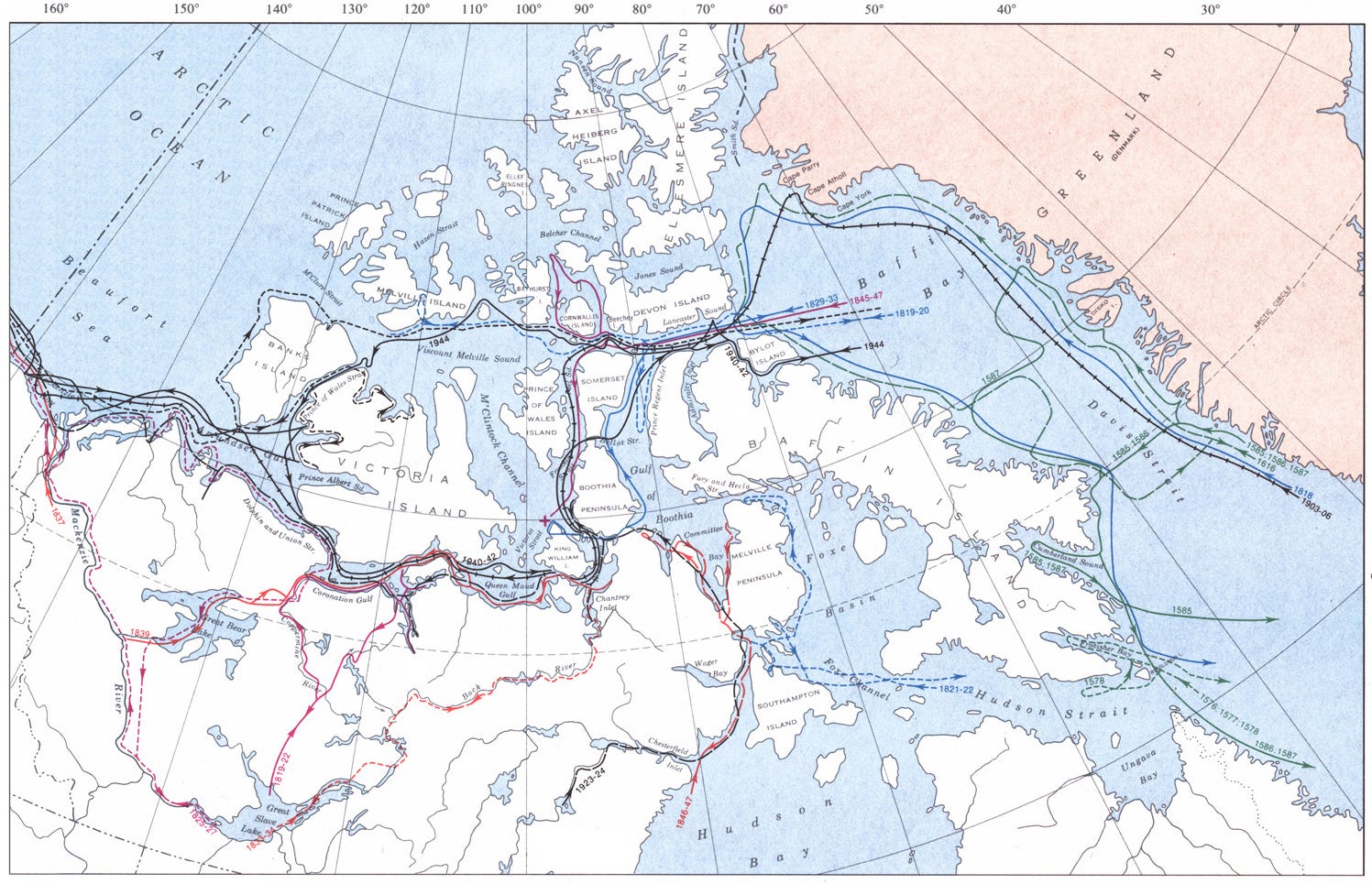
There was a time in the not too distant past when arctic lands weren’t really highly desired. If you go back to the 1800s and even into the early 1900s, there was very little in the way of expansion of lands in the arctic. There were land claims, of cource, but most European colonial powers continued to try to expand in places such as Africa or southeast Asia. Today, this is no longer the case. Due to a combination of better ships that can traverse ice and, unfortunately, climate change, arctic and even subarctic expansion has become very prominent. And, in this area, Canada has a lot to lose by not asserting its dominance over its arctic holdings.
“The geopolitical importance of the Arctic and Canada’s interests in it have never been greater.”
Much of this has to do with trade routes through the northwest passage. When the United States, for example, found oil off the northern coast of Alaska, there became an impetus to get that resource to the rest of the world as quickly and efficiently as possible. Given that the Earth is a sphere, the shortest route is typically through the polar region in the north. Alaska, for example, is closer to China, Russia and Europe than basically anywhere else within the United States. And getting this resource requires traveling through Canadian-claimed water. Or so Canada thinks…
In 1969, the United States sent an oil tanker through the Canadian-claimed waters without asking permission, though Canada did monitor the event and even helped guide the vessel through. The U.S. did so again in 1985 under a similar scenario. In both cases, Canada was involved, though never formally offered permission nor did the United States ever ask for it. This poses a problem for Canada because, despite their claims, they have very little means to prevent this kind of behavior. Over multiple decades, Canada has proposed to deploy various fleets of nuclear submarines, or icebreaker ships to patrol the region, but it was only until very recently that these efforts started to materialize. As of September, 2022 Canada’s arctic fleet was 3 vessels. Which is not a lot for an area the size of the Canadian arctic.
The Hans Island dispute and the ‘Whiskey War’
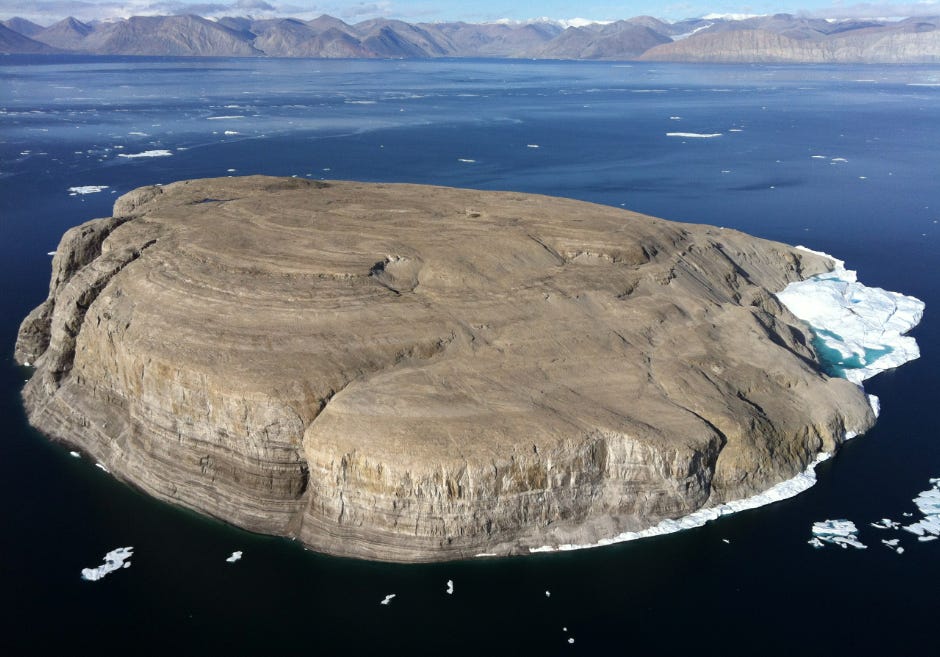
It’s not only the U.S. that has historically given Canada grief over their arctic claims. Denmark – the kind of, sort of, not quite, but really yes, maybe owners of Greenland – also laid claim to some territory that Canada also claimed called Hans Island. And to be fair, the island is basically right in between one of Canada’s islands and Greenland. So for a long time, the two countries engaged in a friendly tit-for-tat “battle” for the island.
This led to a friendly dispute that lasted decades wherein both countries would claim the island was theirs, and when visiting on a normal patrol, each would leave a bottle of their respective country’s liquor with a sign welcoming them to their respective country. So Canada would leave some Canadian whiskey and the Danish would leave a bottle of Danish schnapps. Very cute, right?
In June 2022, the governments of Canada, Denmark, Greenland, and Nunavut finally settled the minor dispute by agreeing to split the island in half. Which is a pretty simple solution that one would think would not require 17 years to achieve, but there’s actually a pretty good reason why a country wouldn’t want to split an island even as small as Hans Island in half.
Future economic benefits
Finally we’re getting to the heart of what Canada gets out of its arctic holdings and why they’re so important. While trade routes, indigenous peoples lands, and protection of arctic lands is important, and all things Canada claims it values for this area, the future economic benefits are, by far, the reason why Canada (and really any arctic or subarctic territory claimant) is so persistent in its claims.
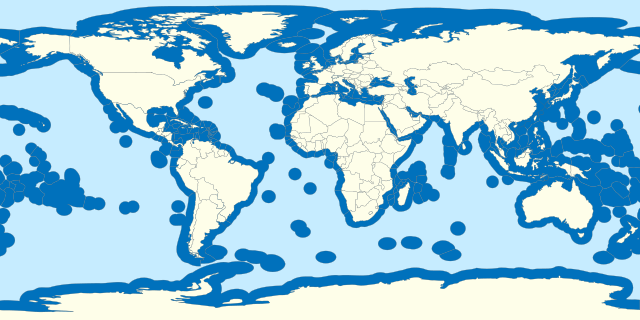
When a country owns a territory, it also owns the 12 nautical miles directly off its shore as if it was its own land. Which basically means that if you sail a ship into those 12 nautical miles, you’re illegally invading that country. But perhaps more important is the exclusive economic zone (EEZ) given to any piece of claimed land. This would be the water that extends 200 nautical miles off any given country’s shoreline and provides that country the exclusive rights to any sort of economic resource that might exist. This would mean things like fishing rights, but also something like oil extraction.
Here’s where we get to why Canada’s arctic islands are so incredibly important. It’s for the same reason that a place like Alaska is incredibly important to the United States, Svalbard is important to Norway, Servnaya Zemlya is important to Russia, and so on. Getting a 200 mile buffer around all these islands amounts to an incredible amount of exclusive economic benefits and with a rapidly thawing arctic, Canada stands to get a lot of benefits from these waters should something like oil be found in abundance.
Basically it all boils down to money… which perhaps is the least surprising part about this article.
Not mentioned, but the war in Ukraine gave Canada/Denmark the impetus to solve the “whiskey wars” once and for all. An international boost to territorial diplomacy basically, not that Russia cared.