

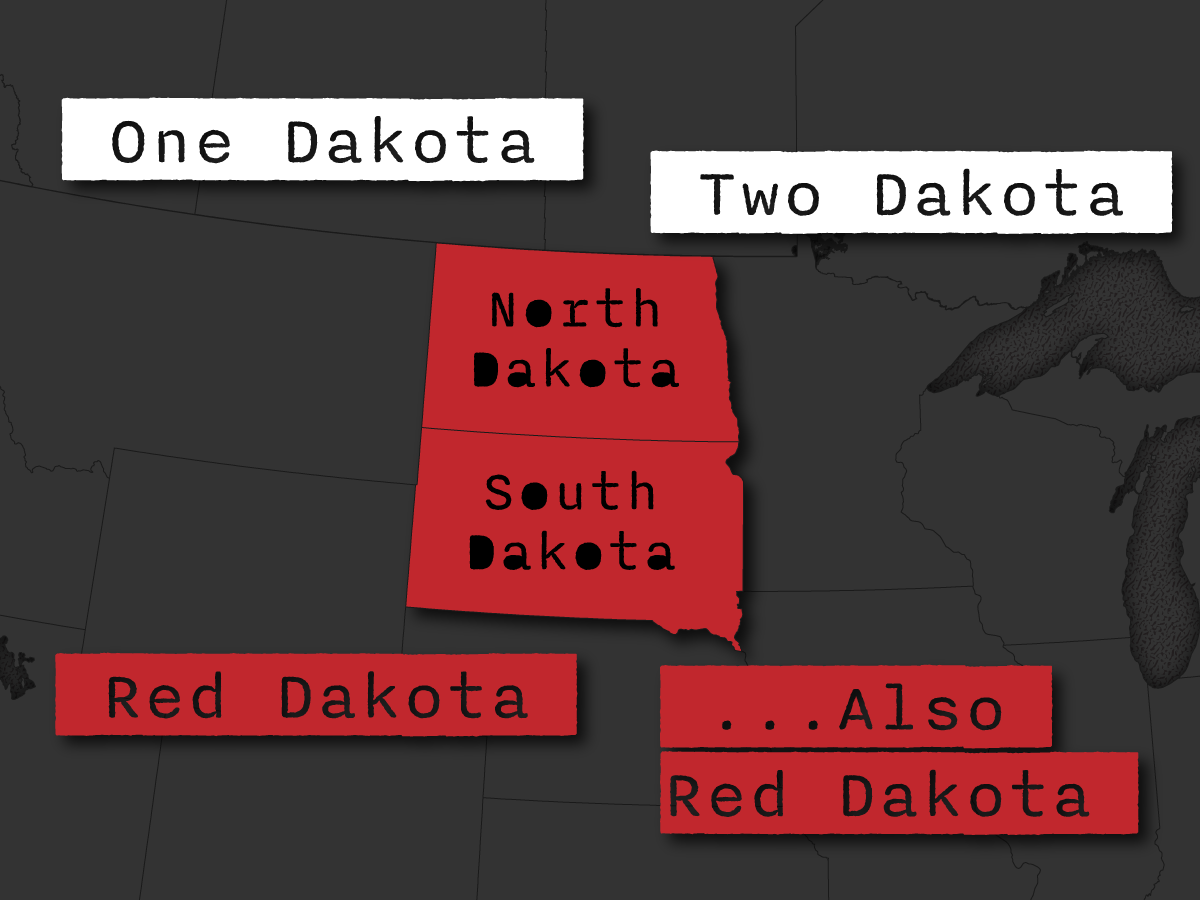
North Dakota and South Dakota. Same basic land use (rural). Same basic region (Midwest). Mostly the same basic politics (conservative). Really the same basic culture all around (white Anglo-saxon protestant). So then, why is that they’re two different states? Well there’s a reason for that! It’s not a good one, but I can tell you, without a doubt, it was intentional in the way it was designed.
North Dakota and South Dakota began their respective stately lives as a single territory that was simply (and sufficiently) named Dakota. It comprised basically the entire northern portion of the Louisiana Purchase that the United States acquired from France. And, for a while, all was well and good in life in the newly formed Dakota territory. But, as happens with most things in life, as you get older, you get more complicated. And for the budding region of Dakota, this was no different.
The Dakota differences
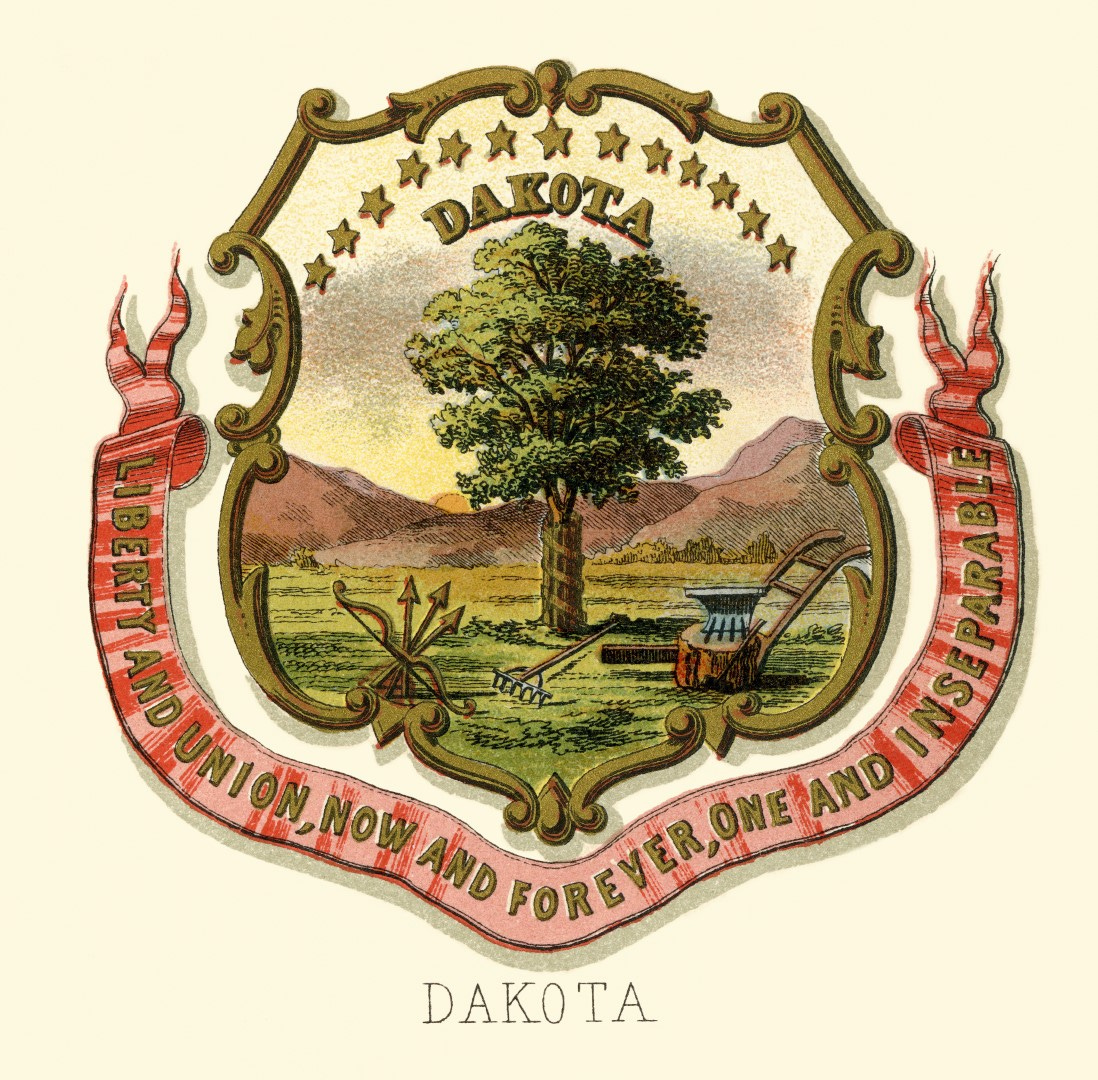
As with any region, there are bound to be differences in how each are settled and managed. In this case, the northern portion of the new territory began developing in a more rural fashion than its southern half. Cattle ranching, fur trading, and far more agriculture permeated the northern portion of the territory, whereas the southern part was more populated and far more urban-oriented. Nothing like New York City or Chicago of course, but certainly more than the north. This started the original cultural deviation between what would become the north and south.
But that’s also not dissimilar from a number of states and regions. California, for example, has a well documented cultural difference between its north and south regions and that hasn’t lead to any formal split in the state. The Dakota territory had another thing going for it though: the railroad split.
Trade determines all
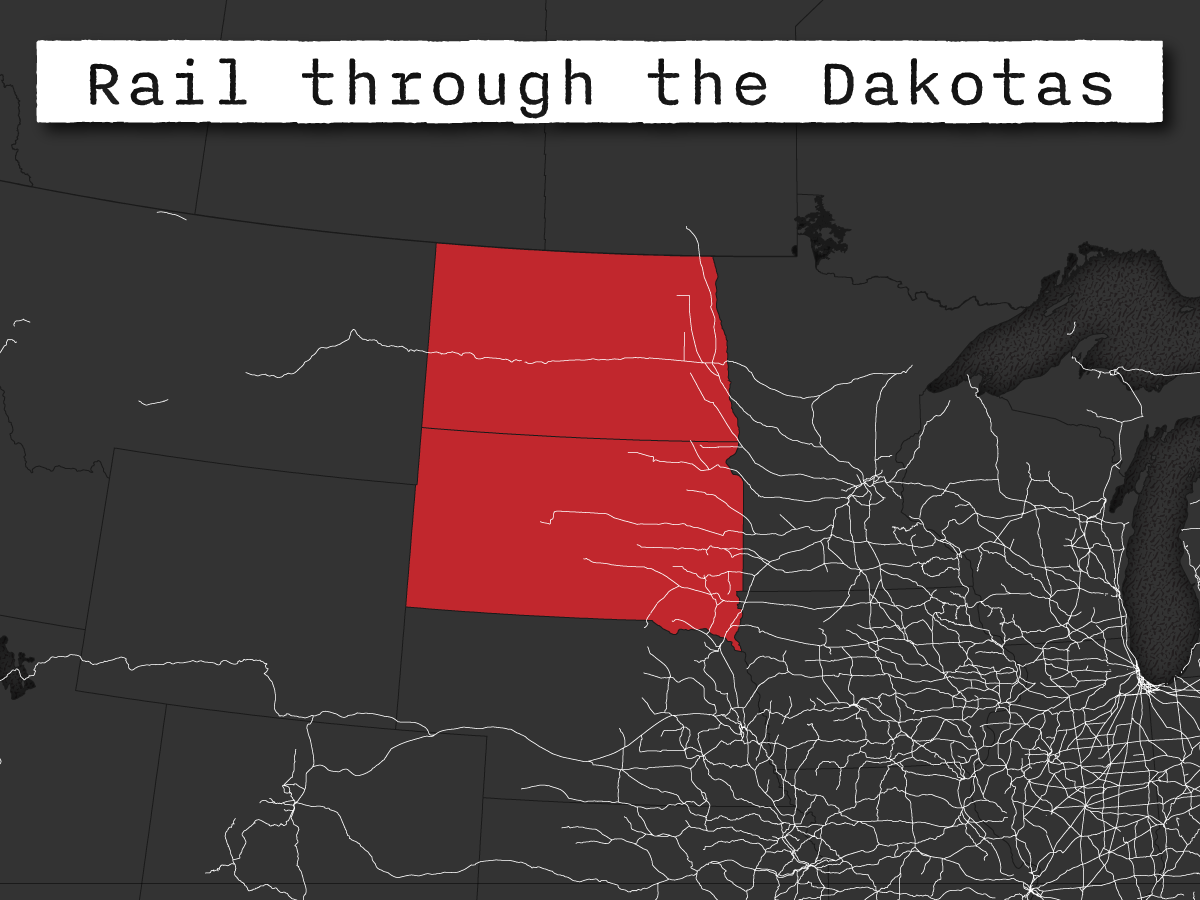
In the middle part of the 1800s, there was a enormous push for settlement in the west by the federal government. This, of course, came with the creation of new train routes to move people and goods quickly and efficiently to the country’s newest territories. Unfortunately, during this time train routes weren’t often built going north and south within these new territories. The goal was always to connect people with population hubs back east, not with other population hubs in the frontier areas. Which, to be fair, any population hubs in those days were rather small so there was little reason to spend big on rail to connect them.
In the case of the Dakota territory, it had two primary rail routes moving through it. In the north, a train connected to Minneapolis by way of Fargo. In the South, a train connected to Chicago via Sioux City. That might not seem like a big difference today, but remember, back in the 1800s Minneapolis was a relatively small, agrarian-focused city, whereas Chicago was the big metropolitan city for the region. With far more movement between these two respective regions to the northern and southern parts of Dakota, it’s not surprising that differences began to emerge between its respective populations. And, oh boy, did differences emerge!
The Formal Division
The differences between the two halves weren’t just based on opinions. There were tangible aspects at play as well. For example, at one point, South Dakota had a population roughly three times the size of its northern half. And those in the south desired to have full statehood given that they now met the population requirements beset on them by the federal government at the time. But the North didn’t exactly feel the same way.
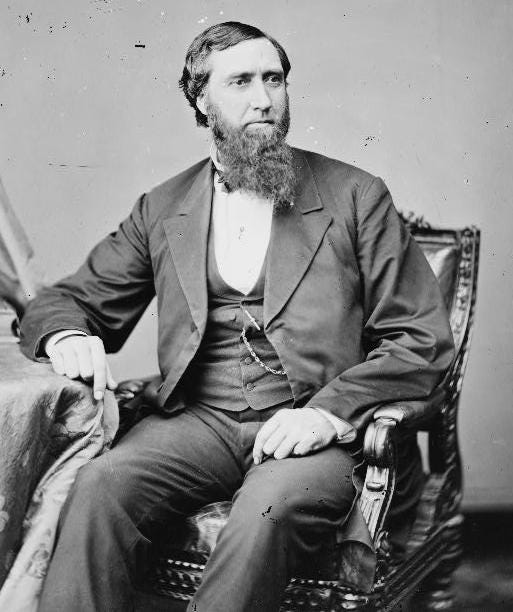
But the big split between the two halves came when then territorial governor Nehemiah G. Ordway moved the capital from the southern half in Yankton to the northern half in Bismarck. This was seen as the last straw and started a series of formal conventions, first by the south and then by the north, to split the territory in two. All of these conventions failed, but it did set in motion what was to come.
The real reason we have two Dakotas

While everything that you just read is important context, and did set in motion the outcome that we have today, none of it is really the reason for having two entirely separate Dakotas. Instead it all comes down to politics.
During the mid 1800s there was a bit of a land rush in terms of getting states on the books. And if you were the party that was in control at the time, you had a considerable power to shape whether you were going to allow a new state that would vote your way or not. In the case of the Dakotas, the president at the time was Grover Cleveland, a Democrat. And, in 1888, President Cleveland proposed admitting 4 new territories as states: Montana, New Mexico, Dakota, and Washington. His logic was that the former two states would vote Democrat and the latter two would vote Republican, and therefor it should be an easy pass within a split Congress.
Unfortunately for Cleveland, later that same year Republicans gained majorities in both the House of Representatives and Senate which changed the equation quite a bit. In order to get ahead of a possibility that a Republican-lead Congress would only admit Republican territories into the union, Congressional Democrats cut a deal with Republicans to allow for Montana and Washington into the Union, but not New Mexico. And, of course, given that there had already been multiple attempts to split the Dakota territory prior to this moment, Republicans seized on the opportunity to admit not just Dakota, but to split it into two territories and admit both at the same time. If your tallying up your math, the Republicans (at the time) managed to get 4 Republican states here for the low price of admitting just a single Democratic one. Not a bad deal at all!
North Dakota and South Dakota
And so here we are today: with two Dakotas. I’m sure people from North or South Dakota today will tell you that they have every right to exist individually. But the reality is that they both exist due to some shrewd political maneuvering to get more senators and congressional representatives rather than any sort of real or perceived differences. Those differences definitely helped solidify the case, but it was hardly necessary.
North Dakota and South Dakota today are both, of course, still predominantly controlled by Republicans. As of 2022, all four senators between the two of them are Republican. Both Congressional representatives are Republican. And both governors are Republican. Which has helped secure minority rule in the Senate far more often than it probably should.
It’s also for this reason that you should probably be skeptical any time someone brings up why states such as Jefferson or Liberty should be allowed. It’s not for any real or perceived differences in their culture, but rather it’s because they would likely, and overwhelmingly be conservative, which would just further cement Republican control when they probably shouldn’t have nearly as much.
I also won’t suggest we combine the two states into one today, but it does highlight the disproportionate amount of power that low population, conservative states have. And that, more often than not, they came to be for the express purpose of politics. Just something to think about.
Actually, four states. There’s a “+” shaped border that divides the Dakotas, Montana, and Wyoming.
The four states between them have barely 3 million citizens. That’s 1% of America, and would entitle the four to have one Senator, if the Senate were rep-by-pop. They have EIGHT.
There are also 3 million Americans in Puerto Rico, and they have… NONE.
And the notion of them ever becoming a 51st state is such a political joke that Greenland, Canada, and Venezuela are “jokingly” put ahead of it in line.
Of course, we Canadians know we’d remain a “territory” (i.e. a colony, no legal difference), just like Puerto Rico.
The American system is so undemocratic this way, that the USA wouldn’t qualify for EU membership - like Belarus, it isn’t democratic enough.
It's basically a story of early gerrymandering then, interesting, but not surprised.
Canada's Senate (while not elected) at least gives seats per region and not per province (although some constitute a region) which somewhat lessens this minority power nationally.