

The World Cup is an incredible grift
That's not to say it isn't fun though.

The geography of sport is something of a passion of mine. During my days writing for SB Nation, I had the pleasure of covering the Portland Timbers during their first few years in Major League Soccer. I’ve also written academically about soccer with Hunter Shobe, my co-host of the What If Geography podcast. All that’s to say, is that sports in general will be a fairly common topic of mine, but don’t worry, it’s always through a geographic lens.
Today, I want to write a bit about the World Cup. Given that we’re a couple days into the 2022 World Cup in Qatar, I thought it was worth highlighting that FIFA has manufactured an incredible grift for the world. And no, that’s not a typo. I spelled G-R-I-F-T, grift.
That’s not to say it’s not a fun event, or to take anything away from people’s enjoyment, but damn this one is particularly grifty.
Also, this article is not going to cover Qatar’s penchant for slavery. That’s a very important topic that I want to cover in more depth someday, but it deserves much more research and thoughtfulness than what I’m writing about today.
Where FIFA’s money comes from

FIFA, also known as Fédération Internationale de Football Association, is the world governing body for basically the entire sport of soccer. If you’re at all involved in soccer in a professional setting, you’re likely working under the FIFA umbrella. Major League Soccer, for example, is sanctioned as the first division league in the United States by the U.S. Soccer Federation, which is sanctioned as the national governing body by CONCACAF, which is sanctioned as the continental governing body by FIFA. Everything flows up into FIFA, to say the least. There are some entities within the sport that exist outside of FIFA but they are small and relatively unknown.
Suffice it to say, FIFA is the king of the sport for the entire world. And, as the saying goes, it’s good to be king. In 2018, the year Russia hosted the World Cup, FIFA made more than $4.6 billion in revenue. Over the 4 year period from 2015 - 2018, FIFA earned a combined $6.4 billion. According to their own annual report, FIFA’s revenue breaks down as such:
TV marketing rights - $3.1 billion
Marketing rights - $1.7 billion
Hospitality rights and ticket sales - $712 million
Licensing rights - $600 million
Other revenue - $322 million
Of that total $6.4 billion, approximately $5.4 billion is spent on things like cash prizes for awards, development of the sport around the world, payments to regional and national federations, and administrative costs. Overall, this would be a fairly by-the-numbers profit and loss statement for a business. And quite a boring one at that, albeit one that it fairly successful. But here’s the thing, FIFA doesn’t actually make anything. They don’t host the World Cup. They don’t own or control any actual soccer teams. They don’t even make their own merchandise. It’s all licensing. They simply grant rights which others pay a ton of money for because of the perceived authority they bring. Chief among them is the right to host the World Cup.
Cost of hosting the World Cup
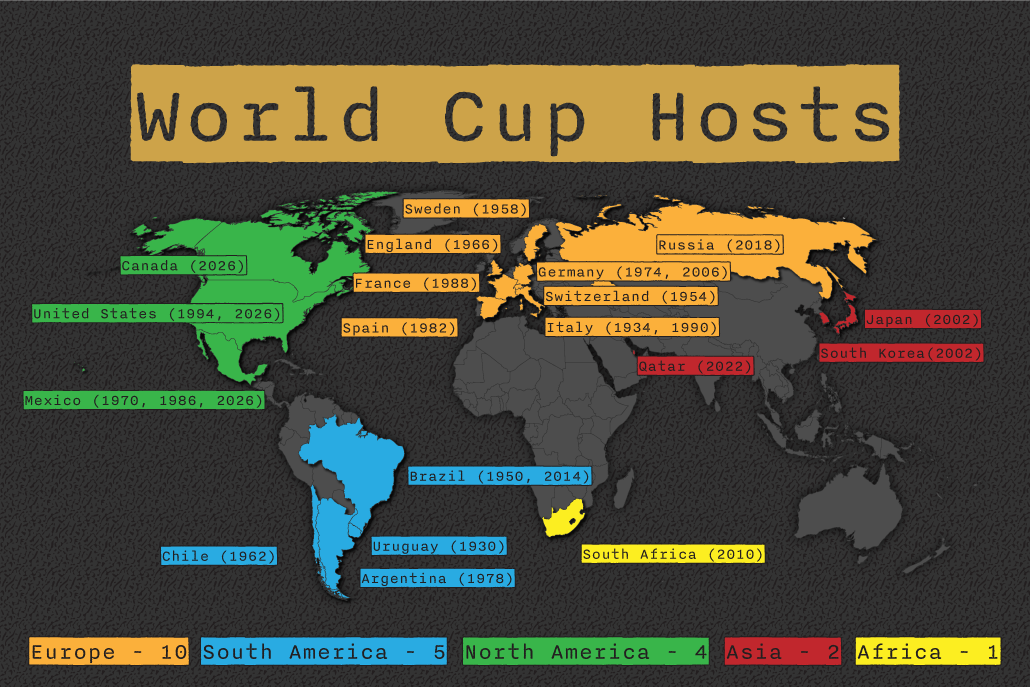
Since 1930, the World Cup has been hosted by 19 countries. Which really isn’t all that many considering there are 193 United Nations recognized states out there. For something that touts itself as the “World” Cup, it really prefers Europe more than any place else. But that’s beside the point. What I really want to highlight here is just how expensive it is to host the World Cup.
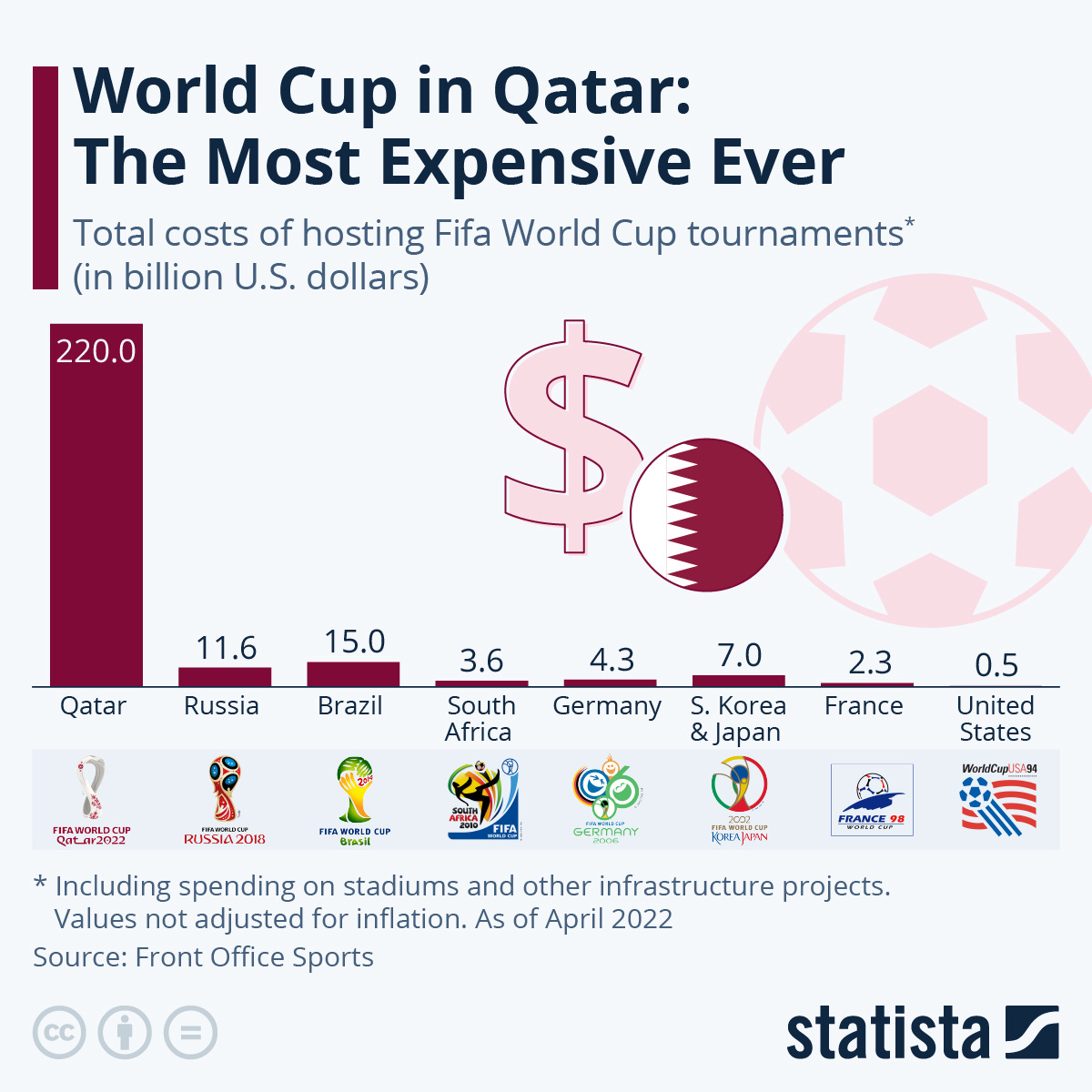
According to Statista, the average cost of hosting the World Cup between 1998 and 2018 is about $7 billion. For a 3-ish week tournament that’s a huge expense. Doubly so for a country such as South Africa which probably could have used its World Cup money for something else.
Now the reason why I excluded Qatar is that it’s an incredibly outlier in this entire equation. Current estimates put the 2022 World Cup at costing $220 billion. That’s a mind boggling amount of money for a single tournament. To put that in perspective, the USA passed an infrastructure bill for its entire country for $1.2 trillion, but that’s for bridges, highways, airports, and everything else over many years. Qatar spent about 15% of that on a single tournament.
And if you’re thinking: why would FIFA ever align and defend a country such as Qatar, whose reputation and policies towards human rights are complete garbage: well there’s your answer. Money. And FIFA loves its money…
Your country is probably never going to win the World Cup
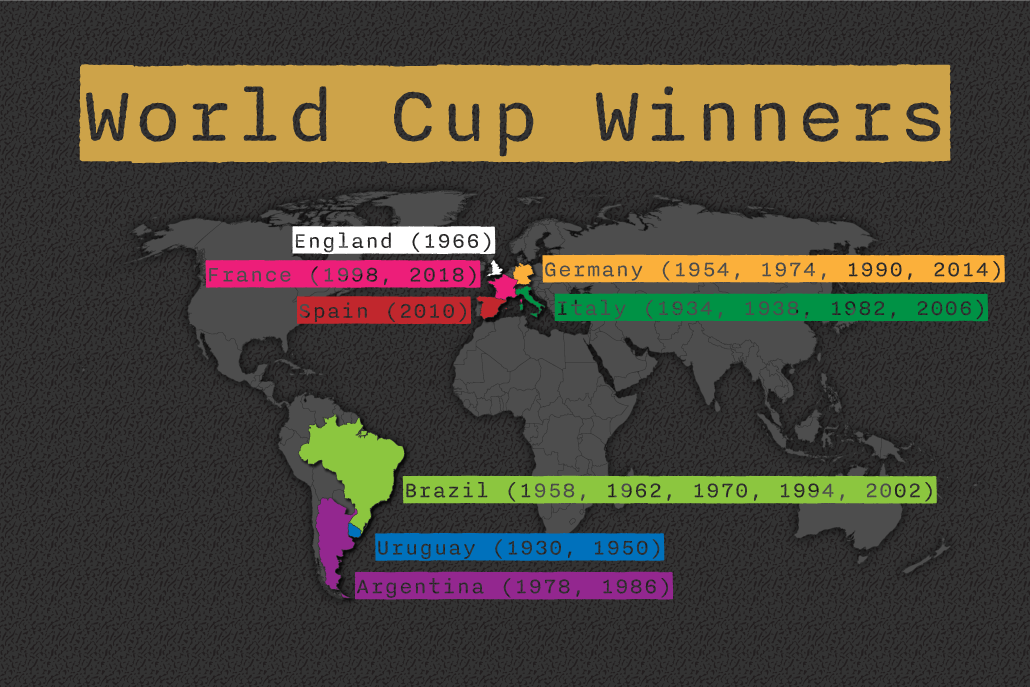
But what makes this all such an incredible grift on FIFA’s part is that: most countries won’t ever win the World Cup. To date, only 8 countries in the near 100 years history of the tournament have won the World Cup. With the vast majority of recent World Cups (from 1990 on) being won by European countries.
And yet somehow FIFA has convinced the world that this is a tournament worth billions of dollars to host. It has convinced billions of people that they should care about this tournament when, as pointed out, far fewer will ever have an actual competitive chance at winning it all. While I don’t know the winners of the 2022 World Cup at the time of this being published, if I had to put down money, I would absolutely choose from one of the countries above. And if we’re being really honest, there’s probably only about half of those that have a realistic shot. The rest? It’ll probably be a short tournament for them.
The grift
But the whole point of this article is simply to point out that FIFA doesn’t make anything. FIFA doesn’t host the World Cup. It doesn’t manage or control any soccer teams. It doesn’t produce merchandise. It’s just a licensing organization. And yet FIFA has convinced everyone to buy in to the tune of billions of dollars per year. And to top it all off? They’re a not-for-profit organization so they don’t pay taxes either. It’s incredible.
I enjoy the World Cup, though I’m opting out of this one for the reasons that Qatar is a terrible country with awful policies that I can’t support. I wish the United States luck and I look forward to watching, and participating in, this grift once again in 2026.