


Today I’m bringing you a bit of an oddball article. Normally I’ll usually cover a specific region or geographic phenomenon in the world. But for this week, I want to talk about something different: walking as a mode of transportation. Typically when we hear about why people should walk more, it’s framed within the context of your health. The common refrain that every person should walk at least 10,000 steps every day is entirely focused on the health impacts of adding steps to your every day.
And while that’s all well and good – and there’s certainly merit to that argument – I’d like to make a geography argument for walking more. Largely because I think there’s much that gets lost when we frame things just as a health benefit. For one, once you bring up someone’s health, you’re instantly entering into a debate over someone’s very specific needs and in that debate you can often lose your primary message pretty easily, which in this case is: walking is awesome!
Who walks the most?

I’m based here in the United States (Portland, Oregon to be exact, if you didn’t know) and, to the surprise of probably nobody reading this, Americans don’t walk a lot. According to a study conducted by the research journal Nature in 2017, of 46 countries analyzed by on average steps taken per day, the United States came in 30th. In fact, the United States has a well known distaste for walking even going as far back as the colonial period of the country. In 1797, future King of France Louis-Phillipe while visiting America is quoted as saying:
“Americans are in the habit of never walking if they can ride.”
This definitely holds true to this day. More than half of all trips taken by vehicle in the United States are less than 3 miles. And while I won’t suggest you make a 3 mile trip by foot (though I definitely do and it’s actually pretty easy), there are many more trips within that bucket that are less than a single mile, which again, are still predominantly taken by car. Canada walks a bit more than the United States, and Australia walks about as much.
On the other end of the spectrum, we have China who typically takes the top spot in most lists I could find, followed by a wide range of European countries such as the Netherlands, United Kingdom, Germany and more. Again, none of this is very surprising. These places typically have tighter urban development, smaller roads, and generally just more pedestrian-focused areas.
The geographic reason why people probably don’t walk as much
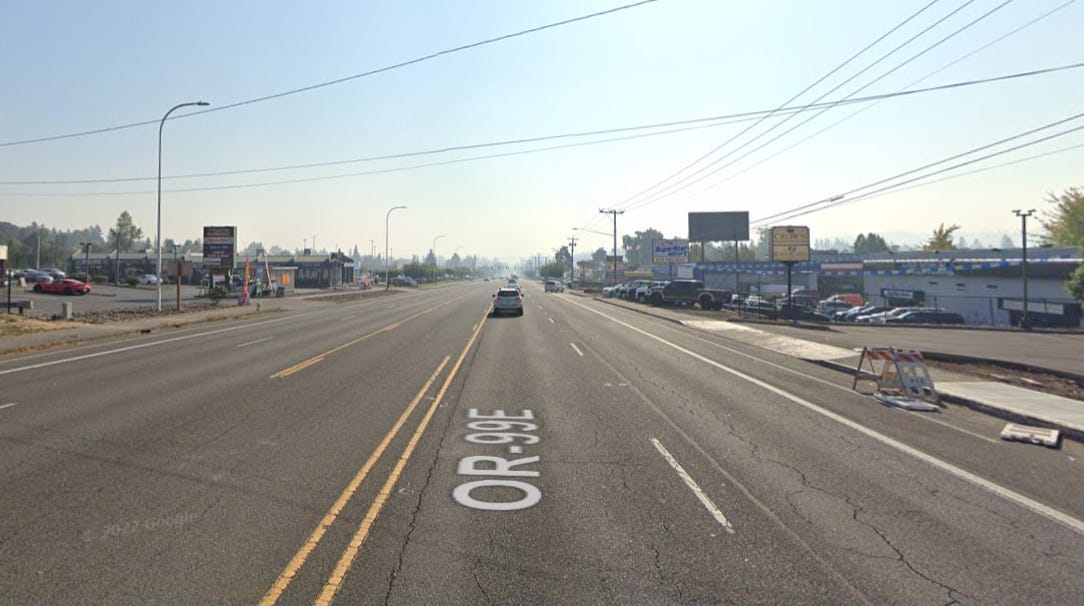
It’s at this point that you’re probably thinking I’m pretty crazy. There are plenty of very legitimate reasons why people don’t walk. And it all depends on your contextual situation. Again, using the U.S. as an example because that’s where I’m based, there are many geographic reasons for why people really can’t walk. In fact, I’d argue that the U.S. has been actively hostile towards pedestrians for the last 100 years or so. Obviously rural areas are not conducive to walking as transportation, but even urban areas have not been set up for success.
For one, cities in the U.S. (and probably Canada and Australia as well) are rife with auto-dependent infrastructure with very wide roads that enable fast moving vehicle traffic which also have very few safe crossings. In fact, if you want to get a crosswalk installed in most U.S. cities, you have to first prove there are enough people crossing at that location to warrant the installation. Essentially you need a certain amount of pedestrian guinea pigs to literally risk their life every day in order to justify giving pedestrians the infrastructure which would enable them to, you know, actually walk.
But beyond that, cities in the U.S. simply haven’t been built with a mind towards the pedestrian experience. Low density housing and big box retail outlets have defined the urban experience for so many people across the country that it’s hard to imagine using your own two feet to actually get to where you need to go unless you have literally no other method of transportation available. In these situations, at best it’s simply not pleasant to walk and at worst it’s actively dangerous.
That said, there are places that do have environments where walking is quite nice! Yet still, more often than not, Americans will opt to hop in a vehicle.
Walking as place making

And so let’s get to the whole point of this article: what is the geography argument for walking more? Well it really does boil down to the easier-said-than-done concept of place making.
Think about it like this: let’s say you have a normal commute to and from a place you normally visit that’s about one mile away from your home. That place can be anything – your child’s school, a grocery store, a community center, a friend’s house, etc. – so I encourage you to think about something that matters to you. Now normally to get to that place, you’d likely drive your car which would take anywhere from 3-5 minutes depending on traffic conditions. It’s quick and easy. And because it’s so quick and easy you likely will always drive to get there. After all, what could you possibly be missing by saving 15-20 minutes of time for each trip? Literally everything.
As it turns out, when people are driving (or even riding a bike or riding the bus), they’re not really noticing all that much going around them. Sure, in theory, they pay attention to the other vehicles on the road, traffic lights, and other things so as to not cause a crash, but they’re not paying attention to the actual place they’re driving through. There’s simply no way to do so. Cars move too fast and are far too separated to really get a feel for a place you simply pass through. This means that, as you drive from your home to whatever that 1-mile destination is, you’re actually missing out on a lot of what makes that place, a place.
That same trip as a walk might take around 20 minutes to complete – far slower than driving admittedly – but you’re also getting an actual idea of what that intermediary place is in between your home and destination. You’re physically closer, of course, but you can also stop on a whim, turn around, step aside, or simply look more closely at places as you walk by. You’ll notice small details which add to the character of a place. And, perhaps most importantly, you’ll actually interact with other human beings. Even if you don’t talk to them, you’ll be forced to walk near, around, or by other people. All of this combines to make an area an actual place to you. And when you have a place and you regularly interact with other humans, studies show you’re happier, more content, and less stressed out. Which gets a bit into the health benefits, but whatever, we’re here.
Cars can be incredibly convenient and obviously walking 10 or 20 miles a day is not very practical, but many other trips absolutely could be walking, you just have to be willing to give it a bit more time. And while that seems inconvenient, in return you’ll gain a much wider understanding of your local geography, far more than any Substack newsletter or podcast could ever give you.
Happy walking!
From watching the latest season Jetlag: The Game, it looks like New Zealand has a lot of narrow roads and most towns still have a walkable main street, but you need a car to leave town unless you live in Auckland or Wellington and seldom leave the city unless you leave the country-in case you could probably get away without a car. Australia seems to be closer to the US with Urban Highways vs Canada (mostly limited to the Quebec and Albertan Cities). I do feel Madrid's M-30 is a little close in for a betlway by Europeans standards-but all the history is inside it so I guess it's okay
As a Brit, once stayed at a hotel in Falmouth (Mass) and asked the way to the seafront. Told by the hotel receptionist that it was a couple of miles down the road, just get a taxi from 'over there'. I replied, no I'll walk thanks..... She couldn't believe I would do that; and commented on it the following day.