

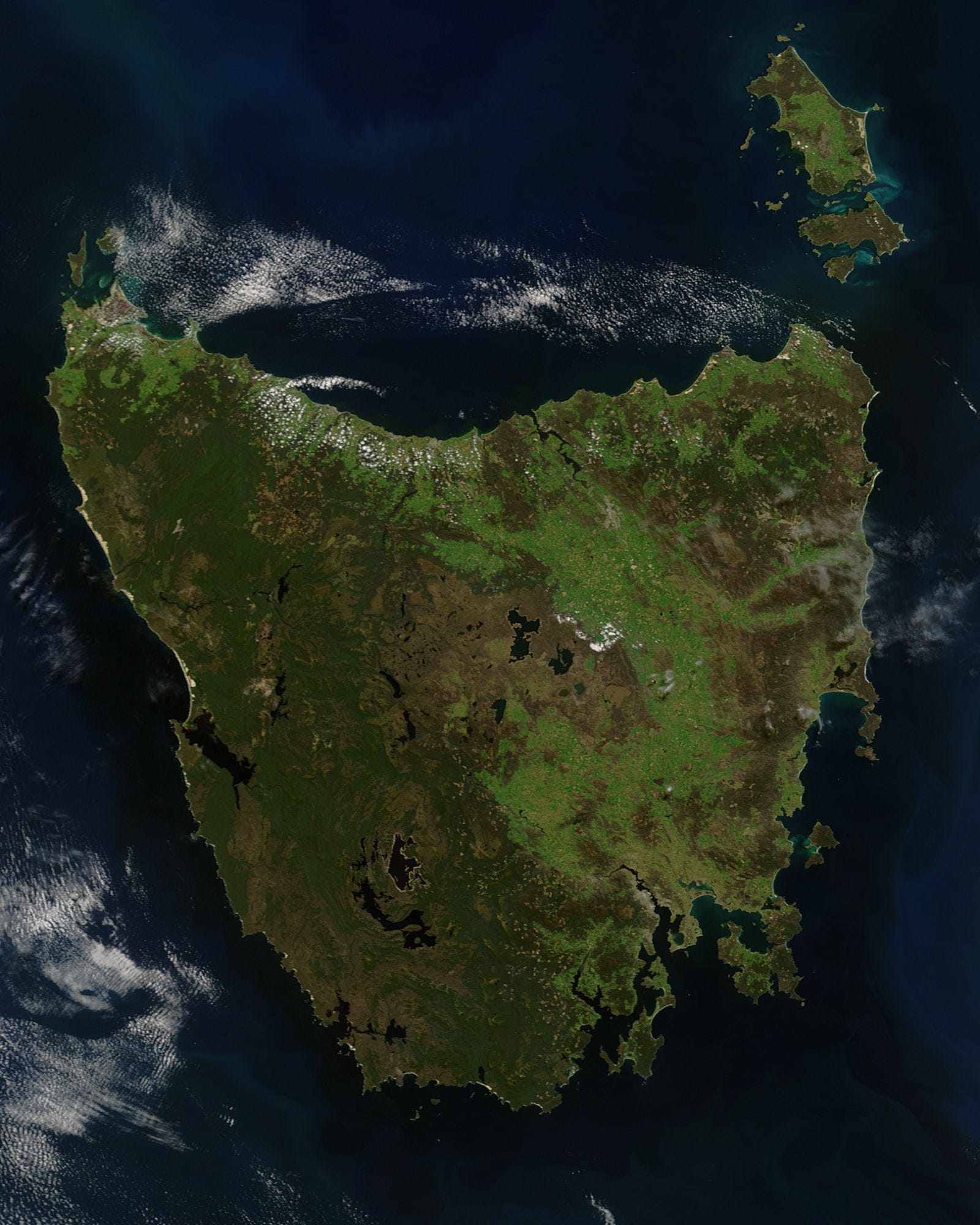
Deep south of the Australian mainland lies a unique, lushly forested island called Tasmania. And while the island might be most famous for the Looney Tunes character the Tasmanian Devil, it is also a very beautiful part of Australia. Yet, despite its appeal, Tasmania remains one of Australia's least populated states.
History of Tasmania
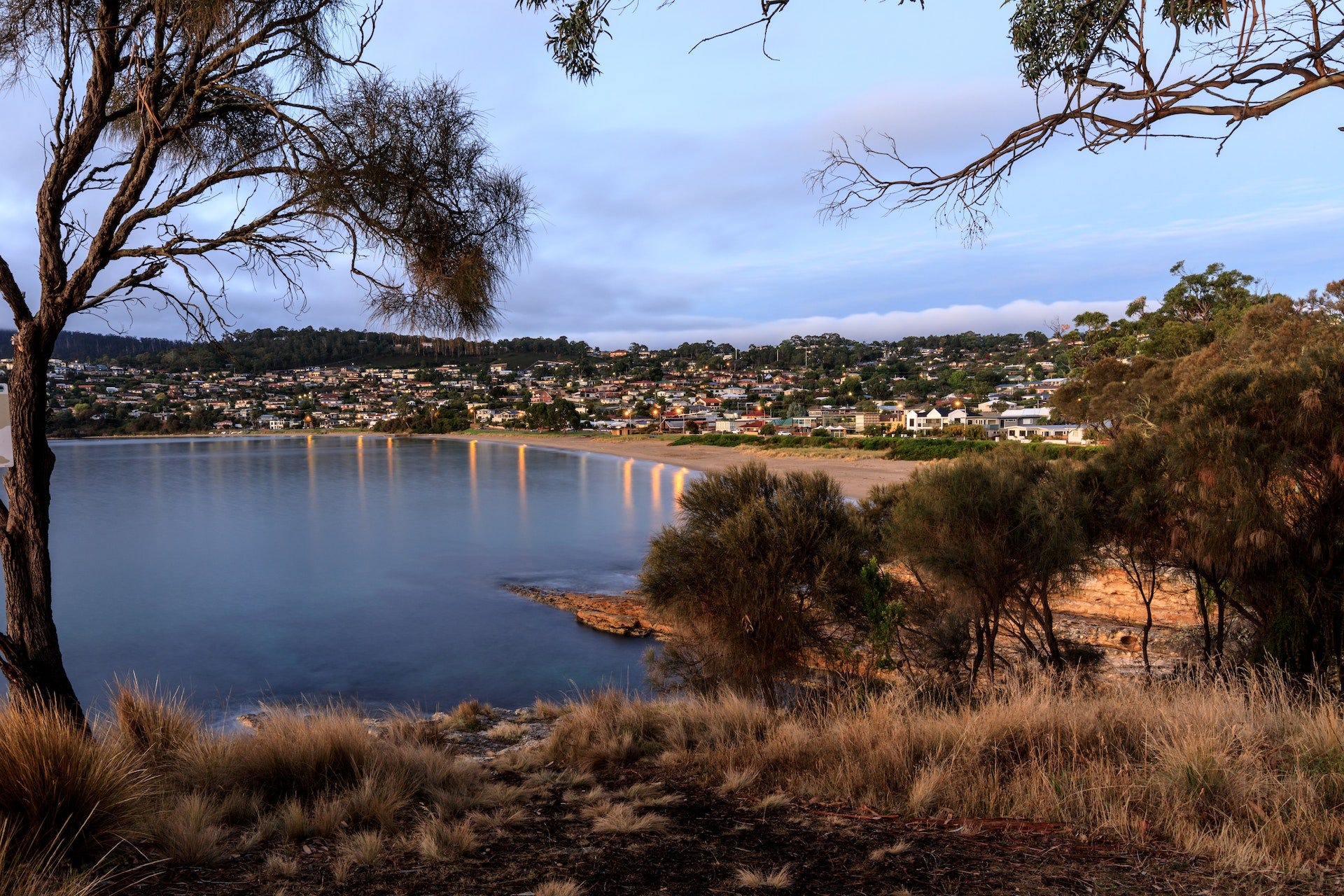
Of course before Australia was a thing and Europeans colonized the land, the original inhabitants of Tasmania, the Palawa people, lived on the island for tens of thousands of years before the arrival of European explorers. Evidence suggests that the Palawa culture had a complex hunter-gatherer society that as quite distinct from mainland Aboriginal cultures. This was probably due to their isolation from the rest of Australia when sea levels rose around around 12,000 years ago.
European discovery and convict era
While Tasmania — and Australia as a whole — would ultimately be settled and colonized by the British it would be a Dutch explorer named Abel Janszoon Tasman who would be the first European to sight Tasmania in 1642. And oddly, despite the island eventually being named for Tasman, he would originally name it "Van Diemen's Land" after Anthony van Diemen, the Governor-General of the Dutch East Indies. However, Tasman didn't set foot on the island, and it remained largely unexplored by Europeans until 1772 when a French expedition led by Marc-Joseph Marion du Fresne would more fully explore the island. The British would be a year behind them in their own explorations.
The British would formally claim Tasmania in 1803, primarily out of fear of French expansion in the region. And like a similar colony in what is today New South Wales in Australia, they would establish it as a penal colony, a place where Britain could send its convicts.
Though it should probably be noted here, that these were not really the dangerous criminals that some might think of. Most of Britain’s forced penal colony inhabitants were there for petty, non-violent crimes and were often there for use as forced labor by the free colonizers who came to settle the land. It’s actually a pretty dark story for the country and one that I think gets made into a joke maybe too often. Anyway, I’m getting off topic here!
Over the following few decades, Van Diemen's Land (remember, today it’s called Tasmania!) developed a notorious reputation as a harsh penal settlement. The period from the 1820s to the early 1840s was particularly brutal, with the establishment of secondary punishment stations like Port Arthur and Macquarie Harbour, where conditions were incredibly harsh.
Simultaneously, this period was marked by violent conflict between the indigenous population and the colonists, known as the "Black War". This conflict, fueled by the invasion of indigenous lands for European settlement, led to the tragic near-extinction of the Tasmanian Aboriginal community.
From Van Diemen's Land to Tasmania
The transportation of convicts to Van Diemen's Land ceased in 1853, and three years later, in an attempt to shed its convict-stigma, the island was renamed Tasmania, named for its original European explorer.
Despite the renaming, however, Tasmania would remain a little bit of a backwater until the late 1800s when the discovery of rich mineral deposits, particularly tin at Mount Bischoff and copper at Mount Lyell, led to a mining boom. Those who are attuned to geographic history of population migration probably recognize this as a similar pattern that occurs elsewhere in the world at the same time (San Francisco, California for example). And with miners and more people, Tasmania's agricultural industry, especially wool, apples, and hops, began to flourish.
The 1900s saw Tasmania continue to develop, albeit at a slower pace than the mainland. The Hydro-Electric Commission, established in 1914, became a significant employer and transformed the state's power supply and infrastructure. But Tasmania would face economic and social challenges throughout the 1900s. This would fortunately be buoyed a bit by its wealth of natural resources, and growing tourism and creative industries.
Today, Tasmania is celebrated for its natural beauty, history, and the quality of life it offers. Seriously, it’s quite beautiful! So why is Tasmania less than 1/10th the size of the state of Victoria, it’s northern mainland neighbor?
Why more Australians don't live in Tasmania

I’ve already established, multiple times now, that Tasmania is quite charming! It has a climate that is relatively moderate. It’s also had a few natural resource booms which typically have driven early population migrations (again see San Francisco in 1850). So where are the people today?
Economic opportunities and infrastructure
Tasmania’s — and Hobart’s — growth has probably come a little bit at the expense of Melbourne’s economic vacuum effect and, to a lesser extent, Sydney’s. Melbourne, located just a few hundred miles north of Tasmania, has become one of the main economic centers of the country. Today, five of the seven largest companies (by market capitalization) is headquartered in Melbourne. And although Tasmania offers a high quality of life, it historically hasn't been viewed as an economic hub for much.
With fewer industries and corporate headquarters, there are generally fewer job opportunities, especially in certain sectors. This largely means that fewer people will pick up and move to the island. One of the primary motivators of migration is whether or not jobs exist for people. It’s why we see people continue to move to areas that might be considered inhospitable in terms of climate, but otherwise offer people wages to make a living. Hobart, Tasmania’s largest city, lacks this to the same degree as Melbourne, Sydney and Perth.
Moreover, while Tasmania has made significant strides in its built infrastructure, it still lags behind mainland Australia in certain areas, particularly in terms of transportation and internet connectivity. These gaps can make the island less attractive to businesses and professionals relying on these services.
Climate
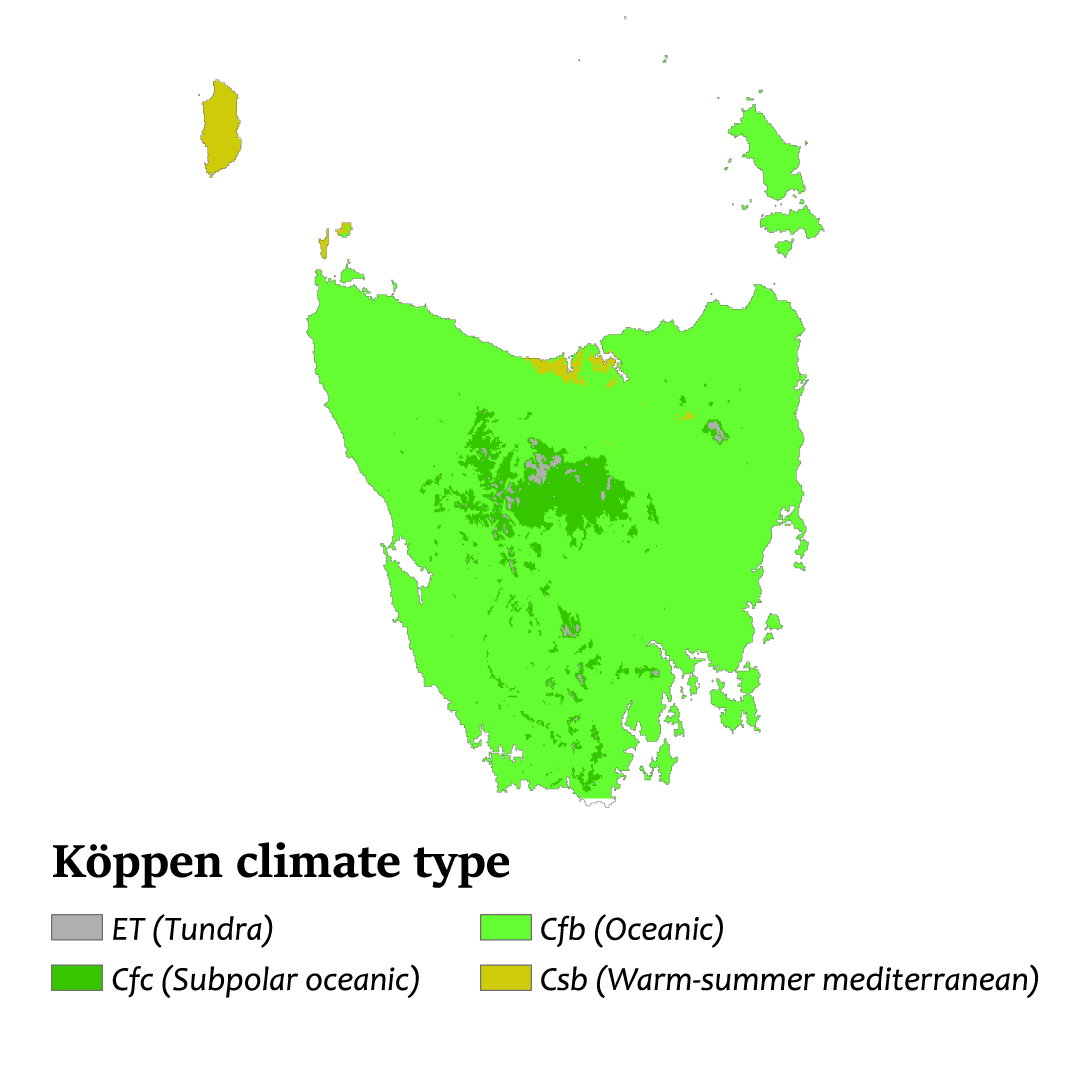
Now I know I said that Tasmania’s climate is relatively moderate. And this is true! According to the Köppen climate classification method of determining climate across geographies, Tasmania is relatively comfortable. Tasmania experiences a temperate maritime climate, with mild summers and cool winters. This would make it quite a bit cooler than, say, Melbourne. And while many might enjoy its cooler climate, Australians accustomed to the warmer, sunnier conditions prevalent in most of mainland Australia might not be as inclined to subject themselves to that willingly.
Perception and cost of living

Finally, and despite its many charms, Tasmania still struggles with some outdated perceptions. Some mainland Australians perceive it as remote, insular, and lacking the hustle and bustle of big city life. Indeed, Tasmania offers a slower pace of life, which, while appealing to many, may not suit those who crave the energy and opportunities of more populated urban areas.
This is all despite the fact that Tasmania remains as one of the most affordable states within Australia. According to a recent reports, Tasmania’s largest city Hobart is about 25% cheaper than many of Australia’s other large cities. But the fact remains: despite being cheaper there just aren’t that many jobs and the perception that there’s not a whole lot going on even further down under in Tasmania. Maybe that’ll change someday…