

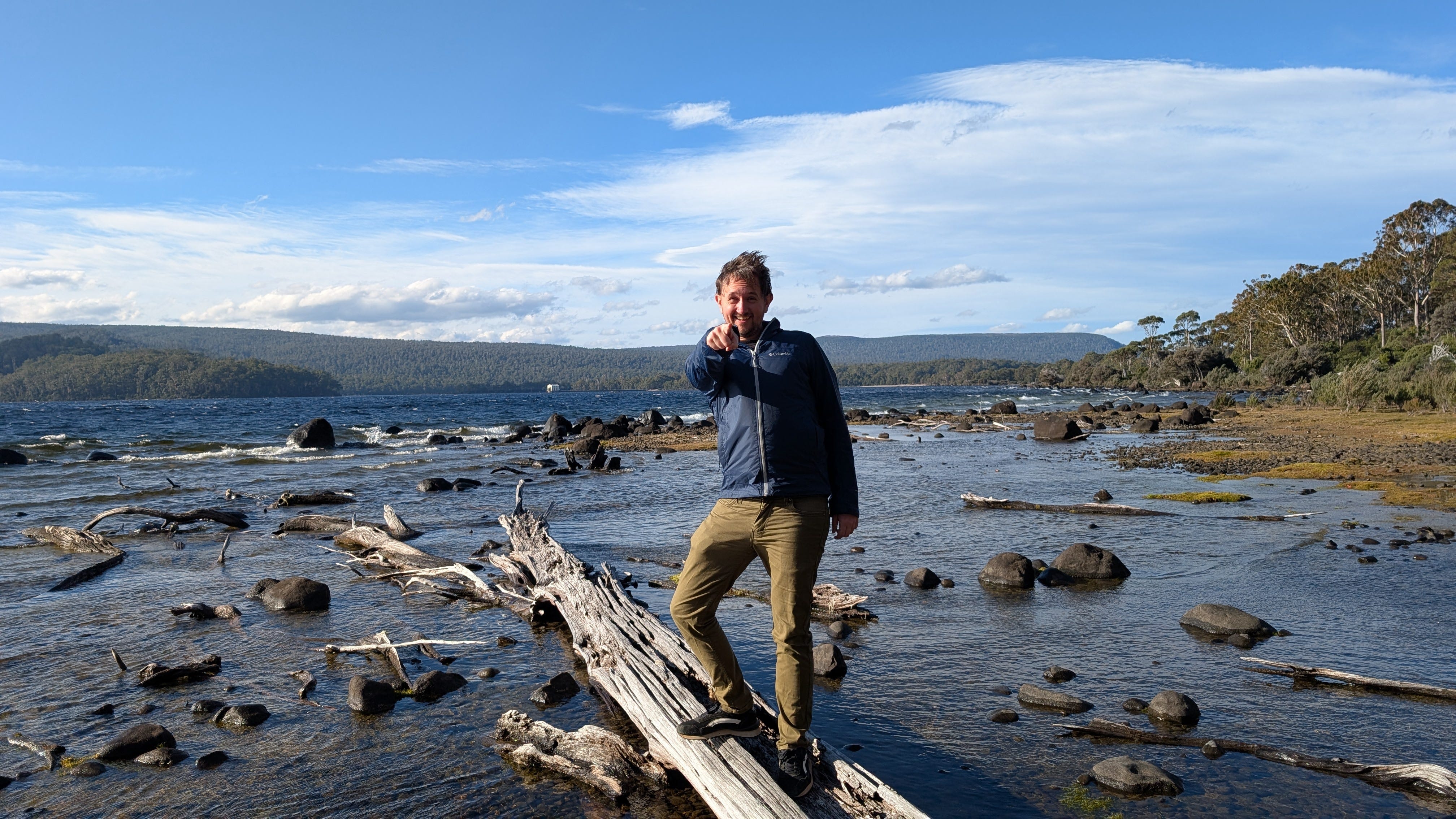
I have a new geography crush. A few weeks ago I made the decision to go to Tasmania, the large island off the coast of Victoria in the far southeastern part of Australia. Mostly because, I’ve never known a single person who’s been to or made the attempt to go top Tasmania. Most visitors to Australia stick to Melbourne, Sydney, or Brisbane (and their respective surrounding areas). So, when I finally made it “down under,” I figured I’d go even more down under than even most Australians are willing to go!
And, of course, if you want to see it for yourself, I have a whole travel video all about it:
But you’re here to read an article about Tasmania so I’ll do that too. Of course, I could just write about Tasmania (or Tassie as the locals call it) and call it a day. But I thought it might be more fun and interesting to compare and contrast it with the mainland. Mostly because the two landmasses are quite different from each other and this IS a geography newsletter after all.
Now, one of the most striking distinctions between Tasmania and mainland Australia lies in the topography and mountain ranges of each. The Australian mainland is predominantly flat, with its highest peak, Mount Kosciuszko, reaching 2,228 meters in the relatively modest Great Dividing Range. But because mainland Australia is SO LARGE, unless your in the Great Dividing Range, it mostly just looks like open land. Montana might think it’s “big sky country” but Australia is truly has a sky that stretches on endlessly.
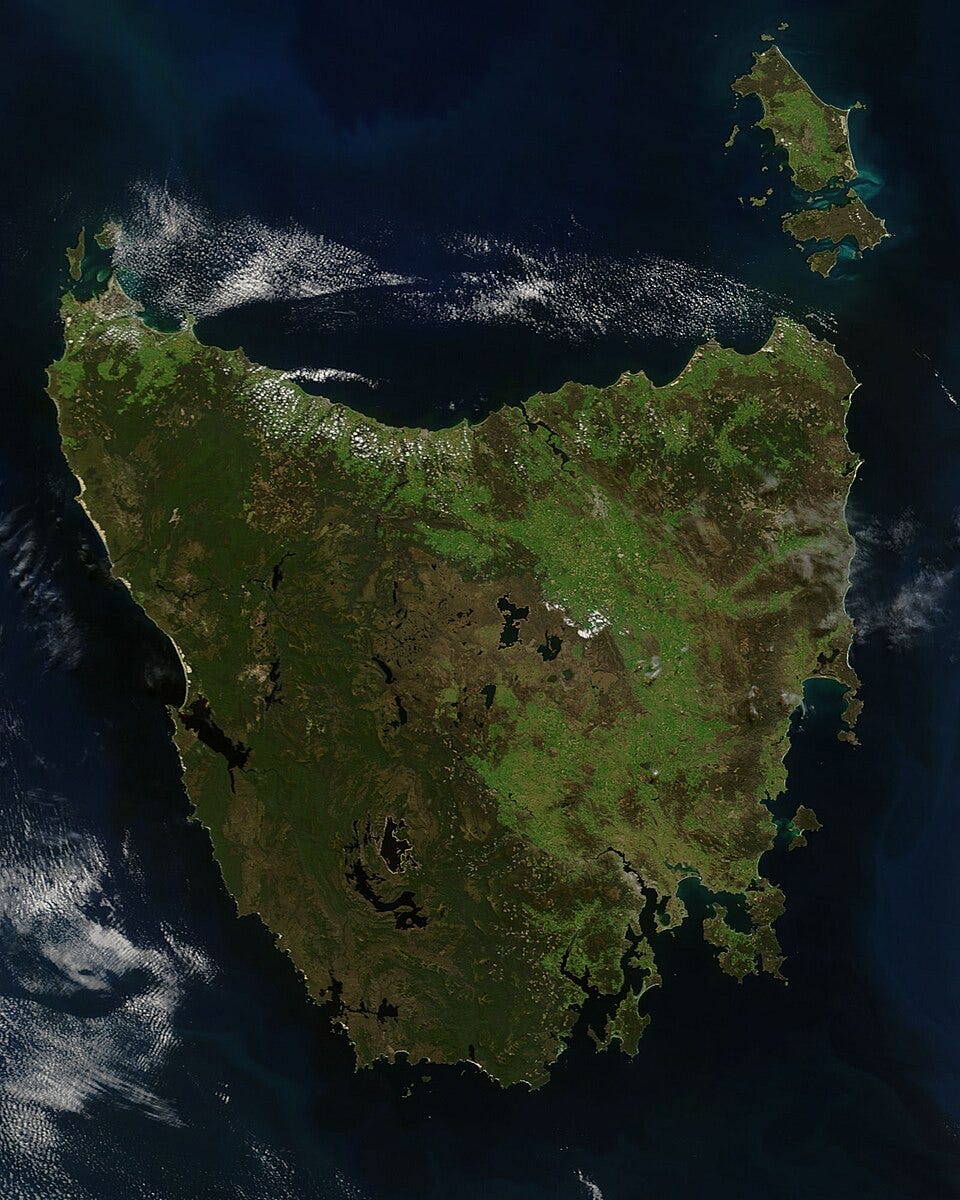
But Tasmania is different! It’s a much more rugged and mountainous land. In fact, it's often referred to as the "island of mountains." Its landscape is dominated by a central plateau and numerous ranges. Peaks like Mount Ossa, though lower than Kosciuszko, rise more dramatically from the surrounding terrain, giving Tasmania a far more varied topography. Tassie has plenty of deep valleys, dramatic gorges, and a multitude of lakes, many of which are of glacial origin. All things mainland Australia is not known for. The deepest lake in Australia is located in Tasmania (Lake St Claire… super beautiful by the way!).
But being a Pacific Northwesterner (of North America) its the climate that really puctuates the geographic divide for me. Of course, mainland Australia's immense size means it has wide range of climates (tropical, dry, arid, temperate, yada yada). But much of the mainland generally experiences hot, dry summers and relatively mild winters, with drought being a constant concern in most regions. Suffice it to say, if you like southern California, you’re probably gonna like mainland Australia.
Tasmania is different though! Due to its being about five degrees farther south in latitude, the island experiences a much more temperate maritime climate. Instead of scorching heat, summers are generally mild, and winters are cool and wet, with significant snowfall in the highlands. And it “benefits” from the "Roaring Forties," strong westerly winds that bring consistent rainfall. It’s also crazy to experience yourself. The wind hits so hard that it kind of hurts a little bit. Anwyay, this constant moisture fosters lush, dense vegetation, including ancient temperate rainforests and vast eucalyptus forests.
Now this difference in climate and topography directly influences the hydrology of each region. Mainland Australia is famously the driest inhabited continent, with vast areas lacking permanent rivers and experiencing highly seasonal rainfall. Its major river systems, like the Murray-Darling, are extensive but often suffer from low flow and salinization. And while Google Maps might make you think there are several large “great” lakes in South Australia. The reality is those are mostly dry salt flats for most of the year. Mainland Australia has no permanent great lakes to call their own.
Tasmania, in comparison, is incredibly water-rich. Its mountainous terrain and high rainfall feed numerous short, fast-flowing rivers that descend steeply to the coast. The island is dotted with thousands of lakes, both natural and man-made, many of which are vital for hydroelectric power generation. This abundance of fresh water is a key geographical advantage that distinguishes it from its parched northern neighbor.
All this is to say, Tasmania is amazing! If you prefer cooler, more temperate places, you should definitely head to the big Australian islands in the south. As someone who loves the dark, brooding forests of Oregon, Washington and British Columbia, I felt right at home in Tasmania. But, make no mistake, the two regions are also significantly different enough that it felt like a unique experience unto itself.
Fake news. Queensland is the best state. Queenslander!
Your favourite state should be Goa. Portuguese from 1510 to 1961, and still pleasant year around. Paradise on earth.