


Indonesia is perhaps one of the most interesting countries in the world. With over 270 million people speaking over 700 languages it’s incredibly diverse. But geographically, it’s astounding that it's even a single country at all. If you were unaware, Indonesia is the largest archipelagic country in the world with somewhere between 16,000 and 17,500 islands (there appears to be some debate on how many islands Indonesia claims to own versus what the United Nations says they own). Few countries have that many islands, and the ones that do typically are connected to a larger continent.
This is all starting to sound like one of my geographic profiles so I’ll stop gushing about Indonesia as a country here. That article will come someday, but this newsletter is about Nusantara, Indonesia’s soon to be built, state of the art, cutting edge capital. An idea that is perhaps not very original, the United States purposely built Washington D.C. in the early 1800s to be its capital, and Brazil built Brasilia to be its capital in 1960, but it’s still a fairly unique process. And it’s compounded by the reality that its current capital, Jakarta, is likely to be mostly under water by the time Nusantara is complete.
What’s going on with Jakarta?
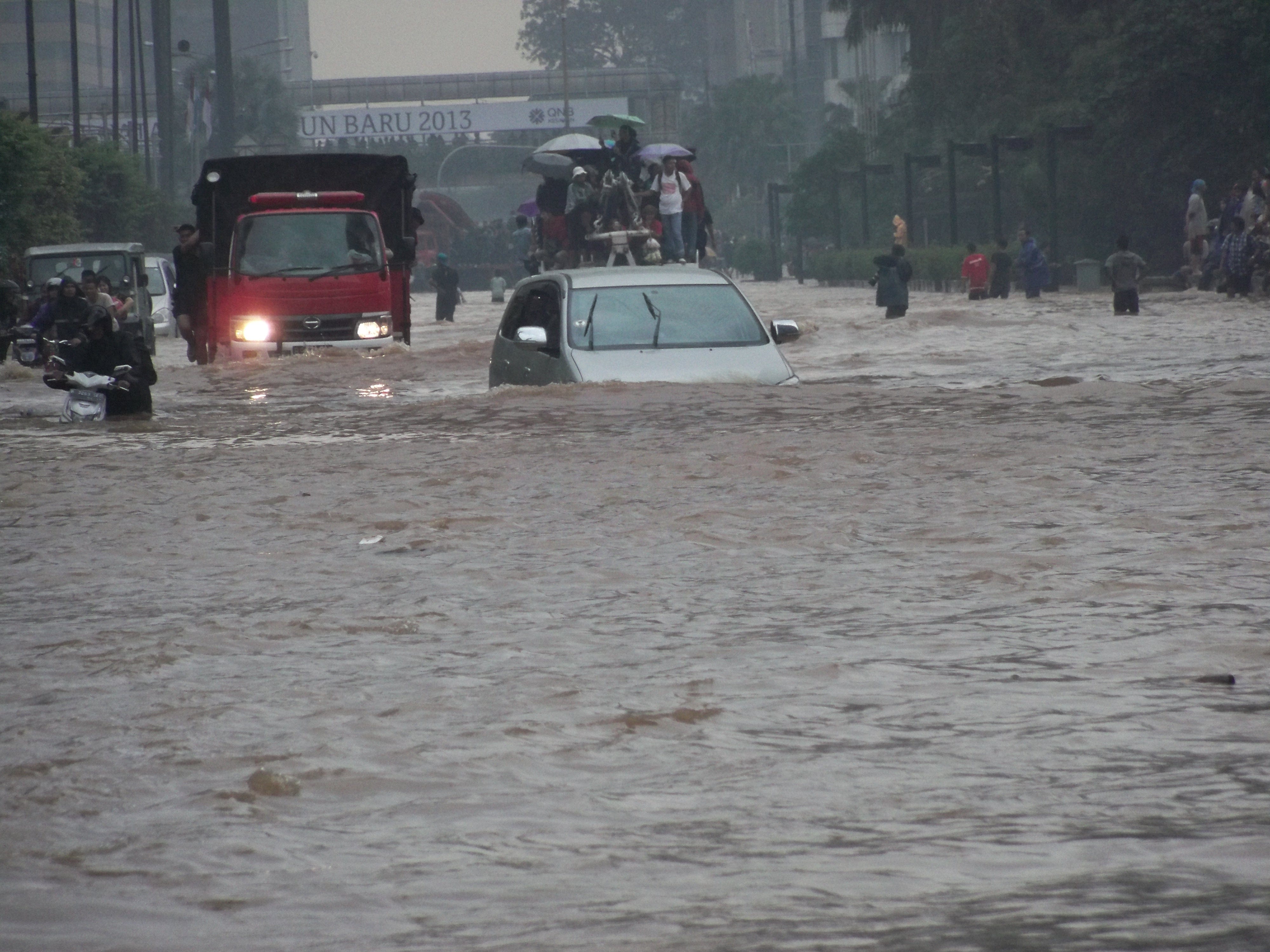
Founded in 1527, Jakarta is one of southeast Asia’s oldest continually habited cities. In fact, city actually predates the modern country of Indonesia by hundreds of years (Indonesia only came into existence as an independent country in 1945 when it proclaimed independence from the Netherlands). Despite this, the country is not what I would consider “sustainable.” Due to the way the city was built originally, large parts of its residents need to pull water out of the ground in order to get access to fresh water. Because of this, the city is actually sinking by about 6 inches every single year. According to Vox:
The problem gets worse every year, but the root of it precedes modern Indonesia by centuries. In the 1600s, when the Dutch landed in Indonesia and built present-day Jakarta, they divided up the city to segregate the population. Eventually, that segregation led to an unequal water piping system that excluded most Indigenous Jakartans, forcing them to find other ways to get water.
Yikes! And this is a completely different problem than most other coastal cities are facing too. Typically when we hear about a coastal city flooding it’s due to rising sea levels. This, of course, is something that every coastal city will need to deal with at some point, but Jakarta's issues are far worse. While it will need to contend with rising sea levels as well, because it's also sinking, it’s already begun to flood. Large parts of formerly habitable parts of the city are now regularly under water.
To combat this, the city has started construction on what’s called a “ring dyke” also known as the Giant Sea Wall Jakarta, that is intended to hold back the ocean from flooding the city. And while the project is expected to be complete in 2025, it still might not be enough. Current estimates suggest that fully 1/3rd of the city could be underwater by 2050. That would make doing things such as passing legislation and laws quite difficult. Enter Nusantara!
Nusantara: Indonesia’s problematic future
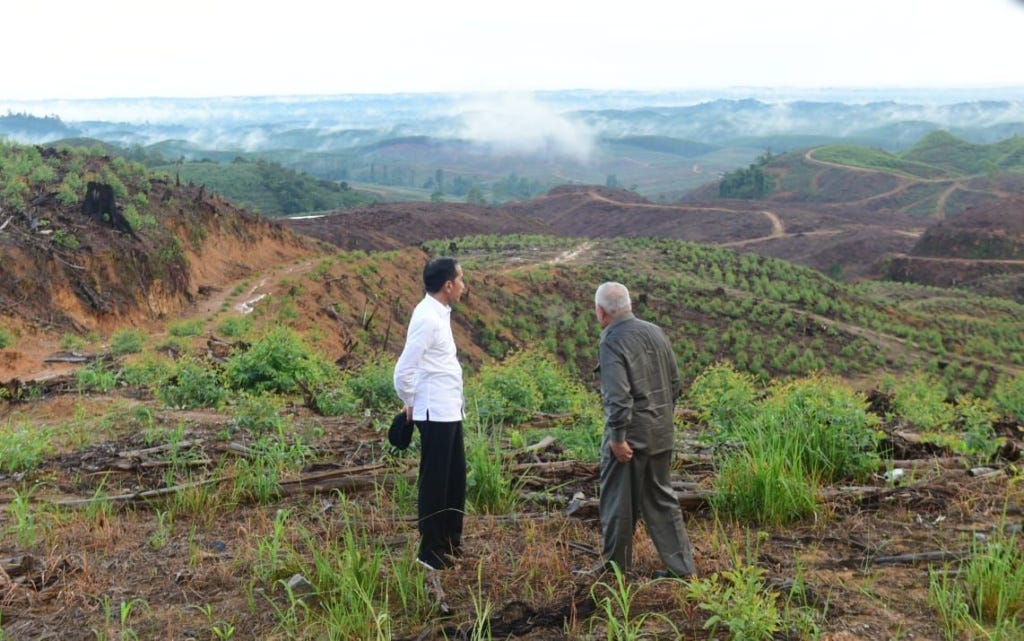
So because Jakarta is sinking and, let’s face it, that’s a terrible look for any self-respecting capital, the Indonesian government has opted to create a brand new capital on the island of Borneo (Jakarta is located on Java). And if we want a super geographic look at who’s in charge of building this new city, take a look at this excerpt from NPR:
The committee overseeing the construction [of Nusantara] is led by Abu Dhabi's crown prince, Sheikh Mohammed bin Zayed Al Nahyan — no stranger to ambitious building projects at home in the United Arab Emirates — and also includes Masayoshi Son, the billionaire founder and chief executive of Japanese holding company SoftBank, and former British Prime Minister Tony Blair, who currently runs the Tony Blair Institute for Global Change.
You’re reading that right. A southwest Asian (Middle East) crown prince, Japanese billionaire, and former UK prime minister all have a hand in the construction of Nusantara. It should be noted that Masayoshi Son has since backed out of supporting the project. Regardless, it’s had an impressive roster of movers and shakers backing it. It would be amazing if it weren’t so controversial!
The reality is that building a brand new city is going to come at a huge cost, both monetarily and environmentally. At some point, Nusantara is supposedly going to be one of the greenest cities in the world, with its energy coming from renewable sources. However, that entire plan appears to be on the backburner, so to say. According to environmental groups, the Indonesian government initially plans to power the city using coal and natural gas rather than its stated goal of powering the city using a yet-to-be-built hydroelectric dam. And even if it does build a hydroelectric dam, that method of power generation is not without its own environmental issues. Disrupting the natural flow of rivers, it turns out, has a lot of negative externalities.
But even beyond the environmental issues, building a brand new city is rarely a recipe for success. Let’s take Brasilia as an example once again. In order to encourage Brazilians to move inland, the government built its brand new capital well away from the coast. Brasilia, at the time, was heralded as a state of the art, modern, urban paradise. But all the amenities and planning in the world can’t build culture, traditions, or any of the things that make cities dynamic and an actual place people want to live in. In Brasilia’s case, it was largely derided as a dead city of government office buildings and most of its residents would “flee” to Rio de Janeiro on on the weekends. Unless Indonesia has a trick up its sleeve, Nusantara is likely doomed to the same fate for at least the first few decades of its existence.
Meanwhile, back in Jakarta, well the people who remain will likely be forced to continue to deal with the sinking problems. Only this time, instead of having the full might of the Indonesian government on their side, they’ll likely have to combat it alone. Which probably won’t end well…
I don’t think we’re seen a whole metropolitan area become a ghost town, but this could become common post-2050, and the ones that have seemed close now (especially Detroit and the Rust Belt overall) will probably see some rebound-although a company taking a gamble and moving or coming to prominence there would be a huge catalyst