

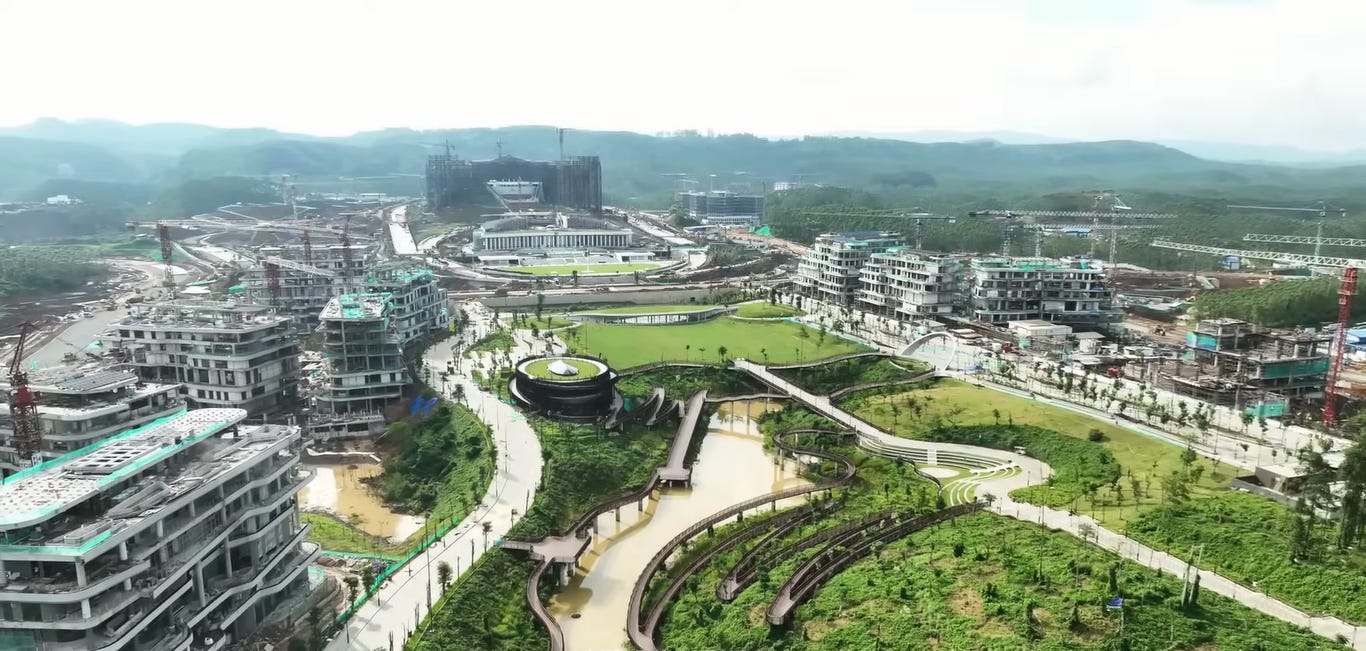
Every decade or so it feels like a country makes a declaration that it’s going to build a glittering, gleaming new capital city that will solve all of its problems and lead it into a new golden age of … something. This, of course, isn’t a new phenomenon. Kings and emperors were making new cities and forts all the time thousands and hundreds of years ago whenever they felt like it. And, a tad more recently, the United States itself built Washington D.C. out of a literal swamp. It took about 10 years from the start to when Congress held its first session there (1790 - 1800).
The newest country to attempt this huge feat of planning and engineering is Indonesia! And I have a whole video all about how that process is going right here:
Anyway, in pulling together this week’s video, I ended up doing a bit of research on other more-modern examples of capital cities that were manufactured, to say the least. And because we all love a good report card, I decided to grade them on how well they performed.
Brazil - Brasília

Brazil is probably the most obvious example here. For centuries, Brazil's government was centered on its Atlantic coast, first in Salvador and later in Rio de Janeiro. However, in 1960 Brazil embarked on a huge urban project: the creation of Brasília, a wholly new capital. Now this move was designed to serve multiple purposes:
To geographically integrate the vast nation by shifting power inland
Spur economic development in underdeveloped regions, alleviate the increasing congestion of Rio; and,
Symbolically forge a forward-looking, modern Brazil, free from its colonial past.
So did it succeed? Mostly, but oh boy did it take a long time.
Today, Brasília has undeniably achieved many of its original grand goals. Mostly, it catalyzed significant investment and infrastructure development in the interior regions, helping to connect previously isolated parts of the country through an expansive road network and fostering new economic opportunities. But this monumental undertaking came with considerable challenges and unintended consequences. The sheer cost of construction placed a significant burden on the national debt, and the rapid influx of workers led to the emergence of less-planned, often underserved "satellite cities" surrounding the meticulously designed "Plano Piloto." It’s also still lacks any natural culture that would resemble something seen in Rio de Janeiro or Sao Paulo. In many ways, it’s still looking for something that doesn’t feel completely artificial. But, at the end of the day, Brasília does work as intended.
Grade: B
Nigeria - Abuja
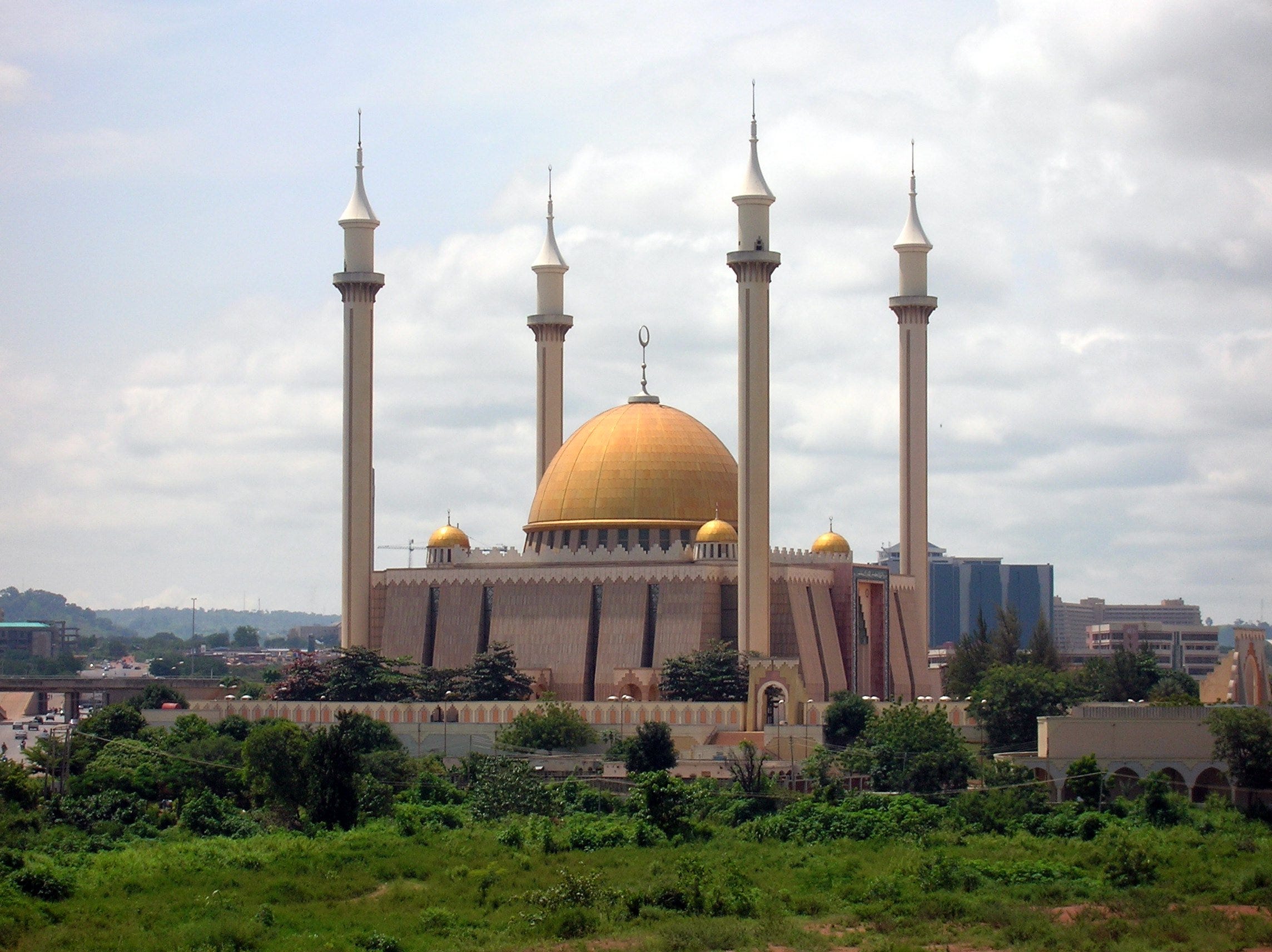
For decades after gaining independence, Nigeria's capital remained in the bustling city of Lagos. However, much like Brazil, the rapidly growing West African country found itself grappling with a capital that presented numerous challenges, such as pollution and overpopulation. As such, the decision was made to construct an entirely new, centrally located capital: Abuja. Officially designated in 1976 and becoming the capital in phases throughout the 1980s and early 1990s, Abuja represents Nigeria's efforts to create a unified, functional, and symbolically neutral seat of government away from the coast.
All that said, the outcomes of the Abuja relocation have been mixed. On the positive side, Abuja has largely succeeded in its primary goal of providing a more organized, less congested, and politically neutral environment for the federal government. Its infrastructure, particularly within the central districts, is significantly better planned and maintained than that of Lagos, offering a more conducive environment for administrative functions and diplomatic missions. The move also contributed to the development of Nigeria's interior, creating a new economic pole within the country and attracting internal migration. All things Nigeria set out to do.
However, the costs associated with building Abuja from scratch have been enormous, placing a significant strain on national resources (a common theme you’ll see again and again). Furthermore, despite its planned nature, Abuja struggles with issues of social inequality, with a clear divide between the affluent, well-serviced central zones and the burgeoning, often underserviced satellite towns where many lower-income residents and workers reside. The city also grapples with a high cost of living, making it inaccessible for many, and it sometimes faces criticism for lacking the vibrant, organic cultural life characteristic of older Nigerian cities like Lagos. So like Brasília but not quite as effective.
Grade: C
Kazakhstan - Astana

Following independence from the Soviet Union in 1991, Kazakhstan initially made Almaty, a city nestled in the southeast near the Kyrgyz border, its capital. However, by 1997, the strategically significant decision was made to relocate the capital nearly 1,000 kilometers north to a smaller, formerly provincial city then known as Akmola. This city was quickly rebranded as Astana in 1998 (meaning "capital" in Kazakh) and was rapidly transformed into a futuristic-looking metropolis. Oh and here’s a bit tidbit: it was briefly renamed again to Nur-Sultan from 2019 to 2022 in honor of its long-serving former president, but has since reverted to Astana. Might have been a HUGE pain for signage.
This move was actually more interesting than just “needing a new city” because Almaty is quite prone to earthquakes. So moving the capital to Astana, a city centrally located within the vast Kazakh steppe, was seen as a way to lessen risk of something catastrophic happening. But also, and of course, there was a strong desire to better control and integrate the country's diverse regions, particularly the northern areas with significant ethnic Russian populations. Symbolically, Astana was conceived as a statement of Kazakhstan's newfound independence and its vision for a modern, prosperous future, distinct from its Soviet past, something countries all around Russia today have made attempts at. To that end, the city's outlandish and futuristic architecture was intended to project an image of progress on the global stage.
Astana's development has been nothing short of spectacular, transforming from a provincial town into a gleaming, futuristic capital in a remarkably short period. It has undeniably succeeded in creating a modern administrative center and a striking symbol of Kazakh nationhood, attracting international attention and investment. And while building the city was incredibly expensive, it was largely funded by Kazakhstan's rich oil and gas revenues. So unlike Nigeria and Brazil, it didn’t have the same debt effect. At the end of the day, the biggest strike again Astana is that it still feels very artificial. But given that it’s such a recent example of a newly built capital city, it’s probably just a matter of time until it starts creating its own cultural footprint.
Grade: B+
Myanmar - Naypyidaw
For over a century, Myanmar (formerly Burma) had its capital in the bustling port city of Yangon (Rangoon). However, in a move that caught most of the world by surprise, the military junta ruling the country abruptly announced in late 2005 that the capital was being relocated to a vast, purpose-built complex deep within the country's interior. This new, deliberately planned city was named Naypyidaw, which translates ominously to "Abode of the King" or "Royal Capital." But unlike Brazil’s, Nigeria’s, or Kazakhstan’s efforts to connect their country and spark development, Naypyidaw's creation was a surprise and mostly shrouded in secrecy and speculation.
The primary motivations behind the sudden and unexplained move to Naypyidaw are widely believed to be strategic and security-focused, rather than economic development or integration. Yangon, as a major port and historical center, was seen by the military regime as potentially vulnerable to popular uprisings and external maritime threats. Naypyidaw, by contrast, is geographically isolated, situated in a strategically central location within Myanmar's largely undeveloped heartland, making it easier to control access and movement. The intention was to centralize governmental control in a secure, purpose-built environment.
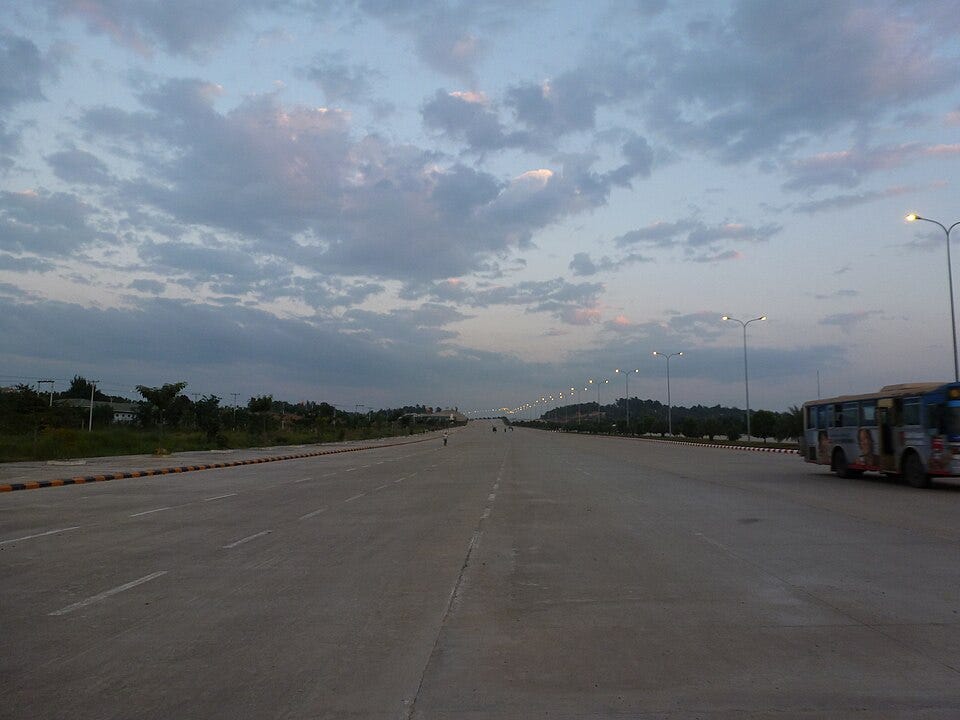
The outcomes and impacts of Naypyidaw are, to put it mildly, distinctive. In terms of providing a secure and centralized location for government, it has succeeded. The city boasts immense, multi-lane highways that are often eerily empty (see above), grand government buildings, and sprawling residential zones, all designed to be highly controlled. However, despite its scale and modern infrastructure, Naypyidaw is famously known as a "ghost city." It lacks any form of organic life, vibrant street culture, and bustling population density typical of a national capital. Even when compared to the other purpose built capital cities here. Businesses have been slow to relocate, and many government workers commute from Yangon or other areas due to the scarcity of amenities, high cost of living, and sheer isolation of the city.
Grade: F
There’s one consistent theme amongst all of these purpose-built capital cities: they lack any sort of organic culture and life. And this is for a good reason! Cities largely develop organically over decades or hundreds of years. Stores, homes, and businesses pop up where there’s need. But if you master plan a city (i.e. plot out where you think everything should be before there’s any specific need), you stifle the ability for that organic growth and with it any semblance of natural culture. This culture can, of course, still be grown there. But it’s going to take a lot longer because it has to fight against the heavy-handed planning built into its DNA.
Building anew, from former strategic geographical locations, is foolhardy. Let us take the case of the big metropolis like London, New York, and Paris globally, but more west.
All commercial, as well as capital cities, built on the banks of, major rivers deltas to great former shipping advantage of ports.
I have nothing, against new federal constructions. In case of Jakarta, which is sinking, but don't know about others, for a reason. Maybe, some are constructed, because of new found riches of oil, gold to tech, etc. But for Kolkata, which was abandoned for a more central location of Delhi, by British colonials.
New Delhi, which is a disaster in the making in terms of logistics. Spread over several neighbouring states, besides its own territory of old Delhi, into Haryana, Uttar Pradesh, etc. Call National Capital Region (NCR).
Let us hope, Geo Geoff, some modern wisdom prevails.
Canberra is not mentioned here but Canberra deserves F