

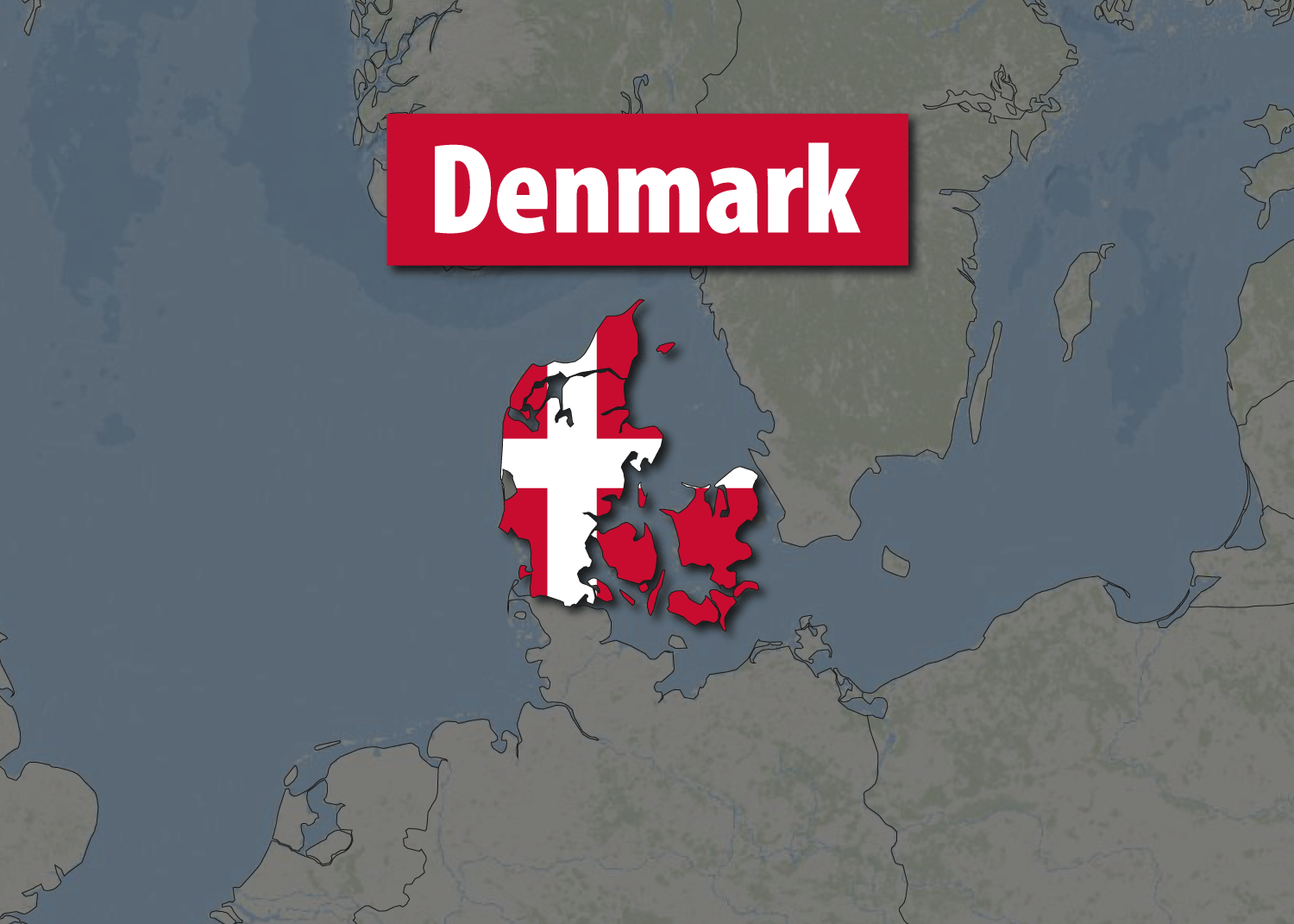
Welcome to a brand new series for the newsletter! Most weeks, I’ll bring you a new article where I’ll walk you through the physical and human geography of the country in the title. And while there are a million different places to read and learn about any given country on the internet, what I’m hoping to bring to you in this series is more about the spatial connectedness of the place rather than just facts, figures, and linear history. And today we’re starting with one of my very favorite countries in the world: Denmark. So let’s just jump right into it!
Side note: this is not a replacement series for my one off articles on any given geographic topic. Those will still come, but these will be mixed in. I’ve been looking for a way to bring consistent, serialized content and I think this will be the most fun!
Quick facts
Population: 5.9 million people (2023)
Capital: Copenhagen
Area size: 16,580 sq mi / 42,943 sq km
Language(s): Danish, German (in the south)
GDP per capita: $70,924
Associations: European Union, Schengen Area, NATO, Nordic Council, and United Nations
The geography of Denmark

Despite its associations with the other Scandinavian countries – Iceland, Norway, Sweden, and Finland – Denmark is pretty unique in terms of its physical geography. Where the other countries are heavily mountainous and, in the case of Iceland, very volcanic, Denmark is not!
While a large part of Denmark is connected to mainland Europe by way of the Jutland peninsula, the country is actually more archipelago than anything else. All told, Denmark consists of 406 islands primarily within the Baltic Sea, though some also live in the North Sea. And on one of those islands, Zealand, lives the country’s largest city and capital: Copenhagen! This means that, in terms of physical geography, Denmark actually has more in common with the Netherlands as both are largely low-lying countries. Denmark has an average elevation of just 106 feet above the sea level and its highest point is Møllehøj, at 560.56 ft. This makes the country particularly susceptible to rising sea levels.
In terms of population, of the nearly 6 million Danes, 644,431 of them live directly within Copenhagen making it the 31st largest city within the European Union. An additional 1.7 million Danes live within either metro Copenhagen or on the general island of Zealand (not to be confused with New Zealand, more on that below). Copenhagen makes up the center of the Øresund Region (also known as Greater Copenhagen) which is also home to the Swedish city of Malmö, Sweden’s third largest city. Copenhagen and Malmö are directly connected to by the Øresund Bridge (and tunnel).
The place and how it interacts with the world

Today, Denmark is part of the European Union, which means it largely follows the laws and regulations as determined by EU policies. But this doesn’t mean that Denmark hasn’t set its own path as well. The country adheres to the “Nordic Model” of economic and social policies. This would largely be defined as a system whereby free-market capitalism is intermixed with a strong welfare system and worker protections. But while Denmark does protect its workers, it’s not quite as strong as some other countries in Europe such as Germany and France. For this reason, many foreign countries opt to do business within Denmark over many of its European counterparts.
Also fun note here: despite being part of the European Union, Denmark does not use the Euro as its currency. Instead the country continues to use its own Danish Kroner which, as of this writing, is equal to about $0.15 USD. This might make it seem like a net benefit in terms of tourism for those from the United States, but the country is actually still pretty dang expensive overall.
Speaking of tourism! In recent years Denmark and Copenhagen specifically, has become a huge destination for world travelers. As of 2019 (which is pre-Covid of course) the city of Copenhagen was the 24th most traveled city in Europe with over 3.1 million annual visitors. This would make it a pretty happening spot for tourists, but one that’s also not overflowing such as Amsterdam which gets nearly 10 million annual tourists. It’s also one I strongly recommend. Super fun city!
In terms of trade, Denmark’s largest trading partner is Germany in terms of both imports and exports. Germany makes up fully 17.7% of all Danish exports netting the country a tidy profit from its Germanic neighbors to the south. Outside of Europe Denmark’s largest trading partner is the United States. In 2022, Denmark’s exports were worth approximately $7.2 billion dollars to the U.S. However, China would top the list of Denmark’s non-European import trading partners. Much of this trade would be due to Denmark’s largest corporations which would include Carlsberg, one of the largest beer brewing and beverage companies in the world, Vestas, a company well known for its wind energy technology, and Maersk, the largest freight shipping company in the world.
Finally, Denmark is part of the North Atlantic Treaty Organization, more commonly known as NATO. This means that Denmark is part of a large defensive military alliance along with the likes of the United States, Canada, and many of its fellow European countries. As part of its war in Afghanistan, the United States invoked Article 5 of the NATO charter, which meant that Denmark was obligated to join the war effort. As such Denmark established a military presence that included both soldiers and air force equipment. Today, Denmark is very much following the lead of NATO and the European Union in its current stance against the illegal invasion of Ukraine by Russia. Denmark has sanctioned Russia and many of its citizens as well as provided over $1.3 billion in military and humanitarian aid to Ukraine.
Fun fact
One of Denmark’s largest cultural “exports” is the concept of “hygge” which is a concept that altogether means a general feeling of coziness, simplicity, or simply being present. There’s no direct translation to it in English and, as such, has increasingly been making its way as one of the newest adopted words for those who speak English natively. If you ever want to experience hygge, maybe grab a warm mug of tea, sit out on a balcony or porch in the morning, and listen to the birds sing to each other and just be.
Also: New Zealand is not named after the Danish island of Zealand. It’s named for the Dutch region of Zeeland.
Denmark punches way above its geographic weight also in the sense that it controls the Faroe Islands and the humongous Greenland in the areas of foreign policy and defence. You'd think that, given size differences between Denmark and the other Nordic countries, it would be Norway or Sweden that would control Greenland - but it's been Denmark that's done so since the 18th century.