

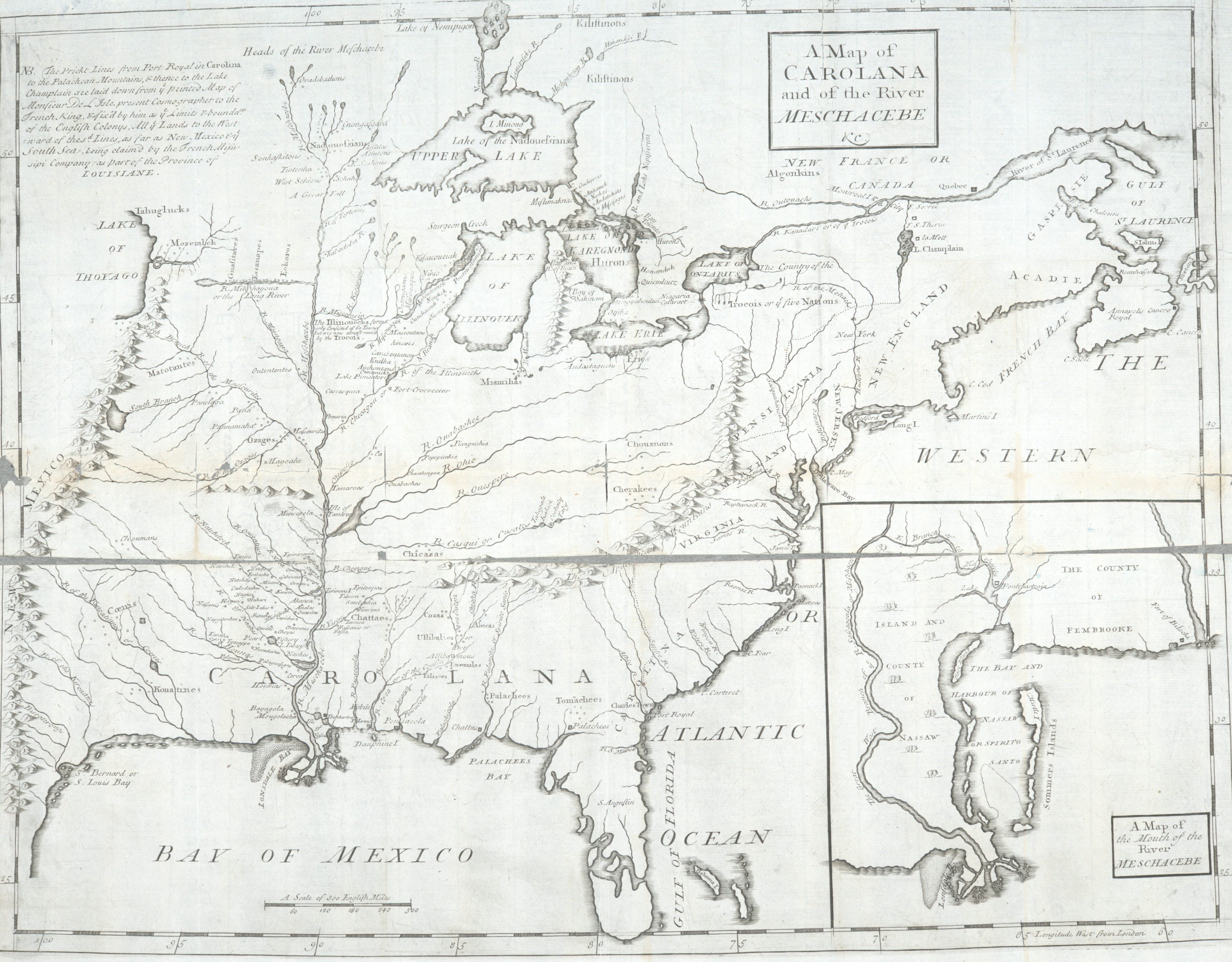
Today’s video over on YouTube (below!) is all about why South Carolina fell behind North Carolina in terms of population, wealth, and overall prominence. It also covers why we even have two Carolinas in the first place because they actually began life as a single colony. Anyway, while I was researching for this video, I actually dug up quite a bit of information on another colony called Carolana, which is what this article is about. So, again, if you want to learn more about the Carolinas of today, here’s the video:
But if you’ve never heard of Carolana, or simply didn’t know that Carolina is not the original colony that eventually spawned two U.S. states then continue reading because the story of Carolana is quite bizarre!
Long before the Province of Carolina was established, a lesser-known but ambitious colonial venture named Carolana was granted in 1629, about 34 years before the Province of Carolina was founded. Conceived as a proprietary colony during the reign of King Charles I of England (King Charles II granted the Province of Carolina), Carolana was one of the earliest attempts to settle the southern portion of what would later become the southeastern United States.
The idea of Carolana was born when Sir Robert Heath, attorney general to King Charles I, received a royal grant for a vast tract of land stretching from 31° to 36° north latitude, roughly from present-day northern Florida to southern Virginia, and then technically to the wherever the land ended in the west. At the time, however, nobody really knew how vast North America was and nobody really took these kinds of things seriously. Virginia and maybe even Georgia had similar territorial rights written into their original charters without any knowledge.
Sidebar though: can you imagine if Carolina (or Virginia or Georgia) stretched all the way to the Pacific? 🤪
At the time, Heath was a loyal royalist and the charter named the land "Carolana" in honor of the king (from Carolus, the Latin for Charles). The colony was envisioned as a place for English settlement, Protestant faith, and trade. Heath's vision included building up the English presence in the region to counter Spanish claims in Florida and French interests further inland. Carolana was intended to be both a strategic borderland and a commercial venture, a southern complement to Virginia, while also ensuring that Spain or France couldn’t encroach on Virginia, which was what the king of England really cared about at the time.
Now, one of the most interesting aspects of Carolana was its religious intention. Heath, a staunch Protestant, wanted the colony to be a haven for Huguenots, French Protestants fleeing religious persecution. However, English law at the time restricted non-Anglicans from founding colonies or owning land, complicating his efforts. Heath also faced political setbacks in England, and he never mounted a significant colonizing expedition. Attempts were made to interest settlers and investors, but none gained enough traction to launch a permanent settlement. The region's reputation for disease, Indigenous resistance, and remoteness further discouraged would-be colonists. Remember, this was during a time when the Virginia and Massachusetts colonies were still getting started. It was also not that long after the colony of Roanoke simple disappeared. So the consternation was, perhaps, correct from would-be investors. Something that the Province of Carolina would be much better equipped to deal with.
Overall, Carolana differed significantly from the later Province of Carolina. The Carolana grant was singular and vague in its geographic boundaries, and the colony never moved beyond the planning stage really. It lacked the institutional support, financial backing, and detailed planning that Carolina would get later.
Ultimately, Carolana failed primarily because it was ahead of its time. The English crown had limited capacity to support distant colonies in the early 1600s, especially amid growing domestic tensions that would eventually lead to the English Civil War. Because of this, Heath lost interest in the project, and by the 1640s the grant was voided due to inactivity. Later proprietors argued that the Heath grant had lapsed, allowing King Charles II to redistribute the land under new terms to men with the means and motivation to build a functioning colony, during a time when Virginia was much more settled, England was far more stable, and other European colonizers were starting to wonder if they should, in fact, take the land for themselves. After all, France technically settled the general area around modern day Charleston a hundred or so years prior with a town called Charlesfort (no relation to England’s Charles, I think they had their own Charles at the time… everybody did apparently!).
Though it left no lasting settlements, the idea of Carolana foreshadowed the colonial ambitions that would later take root in the Province of Carolina and remains a fascinating what-if history for the United States. Had Heath been successful in bringing in French colonists to the colony, the entire region might look very different today.
There was another attempt at French Huguenot colonization, as such, in the New World. That was the France Antarctique venture in present-day Rio de Janeiro in the mid-1500s. It failed for various reasons, including tensions between the Huguenot settlers and those Catholic settlers that also came over, and it was ultimately destroyed and taken over by the Portuguese.