


I’ve made a bit of a name for myself in recent years as someone who dives deep into tiny islands to unveil what they’re like. Not just geographically, but bureaucratically, economically, and culturally. Islands are, by their very nature, kind of weird. Even nature knows this! If you put a species on an island and leave it alone for a thousand years and come back, that species is going to look different because it will have adapted to its new, confined and very specific environment. Look no further than the pygmy mammoths of California’ Channel Islands to see what can happen. But I digress.
The real reason for this week’s newsletter is not about what happens on islands broadly, but specifically, a region of islands that we almost never talk about: the Atlantic islands. And, yes, for this purpose I am specifically making a difference here between the Caribbean islands and the Atlantic islands. So anything from say, Trinidad and Tobago up through the Bahamas and west from there would be Caribbean. Anything outside would be Atlantic. Everyone got their geography sorted out? Great cause I don’t wanna hear about any Caribbean islands in the comments. 🫡
And, of course, the reason why I’m thinking about Atlantic islands is because this week’s video is all about Bermuda which is SO MUCH WEIRDER than even I thought before I made a whole video about it. So go check that out when you get a chance. It’s a fun one!
But let’s get on with the islands.
There are quite a few Atlantic islands that are highly discussed. Obviously, there’s the British Isles which would include Great Britain, Ireland, the Isle of Man, the Hebrides, and all the smaller ones. There’s also Newfoundland and Prince Edward Island as part of Canada. And, of course, there’s Greenland and Iceland, though I guess depending on where exactly you draw the line between the Atlantic and Arctic Oceans will depend on whether it would be included at all. These are the massive islands of the Atlantic.
But what about the Faroe Islands? St Pierre and Miquelon? The Canary Islands? The Azores? Cabo Verde Saint Helena? Ascension Island? Tristan da Cuhna? The Falkland Islands? Or the South Georgia and South Sandwich Islands? If you had ever even heard of half of these I would be impressed.
Because, let’s face it, while the Pacific Ocean is vast and extremely isolating, its islands have far more brand power and marketing behind them. Most people with a passing knowledge of geography could rattle off a half dozen Pacific Islands without skipping a beat.
So, with that, I’ve prepped a high level break down of each island, where it’s located specifically, who owns it (if anyone) and why its so weird. This isn’t super detailed because, each of these islands deserves its own full article (and video if I’m being honest) but this is what I’m doing today so… I don’t know. It is what it is!
The Faroe Islands

Owner: Denmark (Autonomous territory)
Sitting in the stormy North Atlantic between Iceland and Scotland, the Faroes feel like a moody fantasy novel come to life. Despite being an autonomous territory of Denmark, they aren’t part of the EU, they have their own language, and the population of sheep outnumbers the human residents. The landscape is entirely treeless, featuring plunging, cinematic sea cliffs and villages where the houses are topped with thick turf roofs to insulate against the biting oceanic winds.
St. Pierre and Miquelon
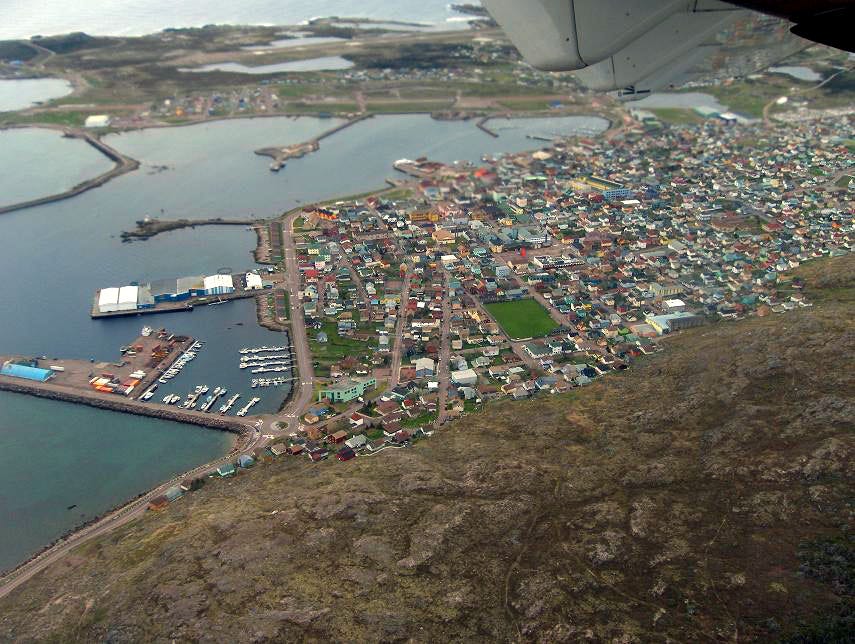
Owner: France (Overseas collectivity)
This island is a literal glitch in the North American map: a tiny, surviving fragment of the old French colonial empire located just a few miles off the coast of Newfoundland, Canada. I only included it here because it’s one of those places that make you go: “huh?” If you step off a boat here, you suddenly need Euros to buy your daily baguettes, the electrical outlets are European, and the gendarmes wear standard French police uniforms. It’s a surreal, freezing-cold slice of mainland France completely marooned off the coast of Canada in the North Atlantic.
The Canary Islands

Owner: Spain (Autonomous community)
Politically European but geographically African, the Canaries sit just off the coast of Morocco and are defined by their bizarre microclimates. On a single island like Tenerife, you can stand in a dense, ancient, fog-soaked laurel forest, drive an hour, and suddenly be in a bone-dry, Saharan-style desert right next to Spain’s highest peak, the active volcano Mount Teide. They are essentially a chain of rugged, volcanic spring-break destinations that also happen to have deep indigenous roots and landscapes that look like they belong on Mars.
The Azores

Owner: Portugal (Autonomous region)
Often dubbed the “Hawaii of Europe,” the Azores sit directly on the Mid-Atlantic Ridge where three massive tectonic plates crash into one another. Because of this volatile geology, the islands are a lush, green wonderland of steaming hot springs, massive caldera lakes, and rich volcanic soil overflowing with blue hydrangeas. For centuries, this isolated archipelago was the ultimate, necessary pitstop for transatlantic sailors and early aviators hoping to survive the long journey between Europe and the Americas.
Cabo Verde (Cape Verde)

Owner: Independent Republic
Cabo Verde is an independent nation of ten volcanic islands off the coast of Senegal that serves as a cultural bridge between Africa, Europe, and the Americas. The islands are stark, arid, and famously windswept, creating a harsh environment that historically caused massive emigration and diaspora. Yet, this intense isolation birthed a beautifully unique culture and a hauntingly melancholic style of music called morna, which perfectly captures the feeling of longing and ocean-bound isolation.
Saint Helena
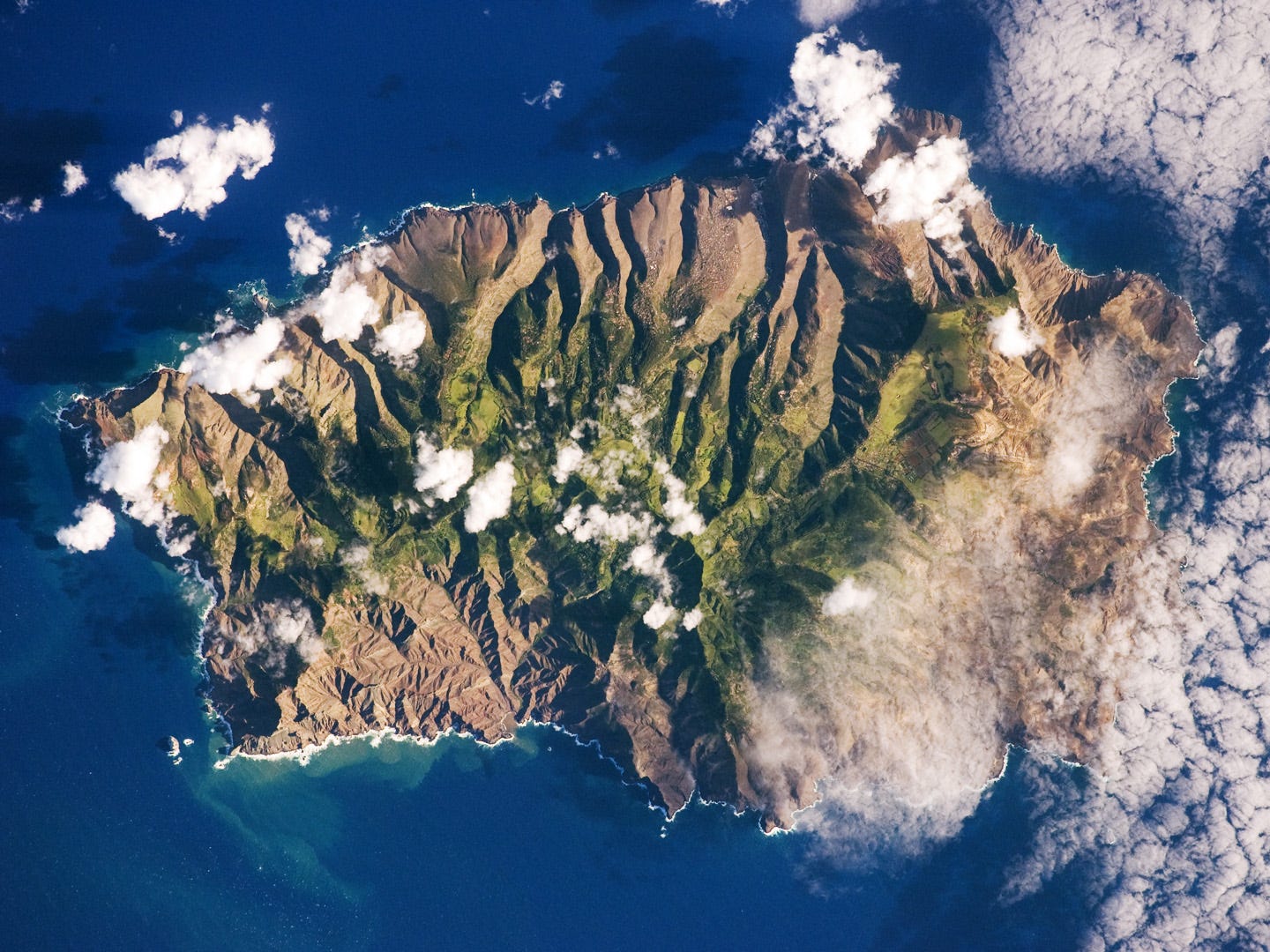
Owner: United Kingdom (British Overseas Territory)
Saint Helena is the definition of “the middle of nowhere,” surrounded by thousands of miles of empty ocean between South America and Africa. It is most famous as the inescapable island prison where Napoleon Bonaparte was exiled and eventually died in 1821. Until its controversial and highly delayed airport finally opened in 2017, the only way to reach the island was by taking a grueling five-day mail ship voyage from Cape Town, making it a true modern-day time capsule.
Ascension Island
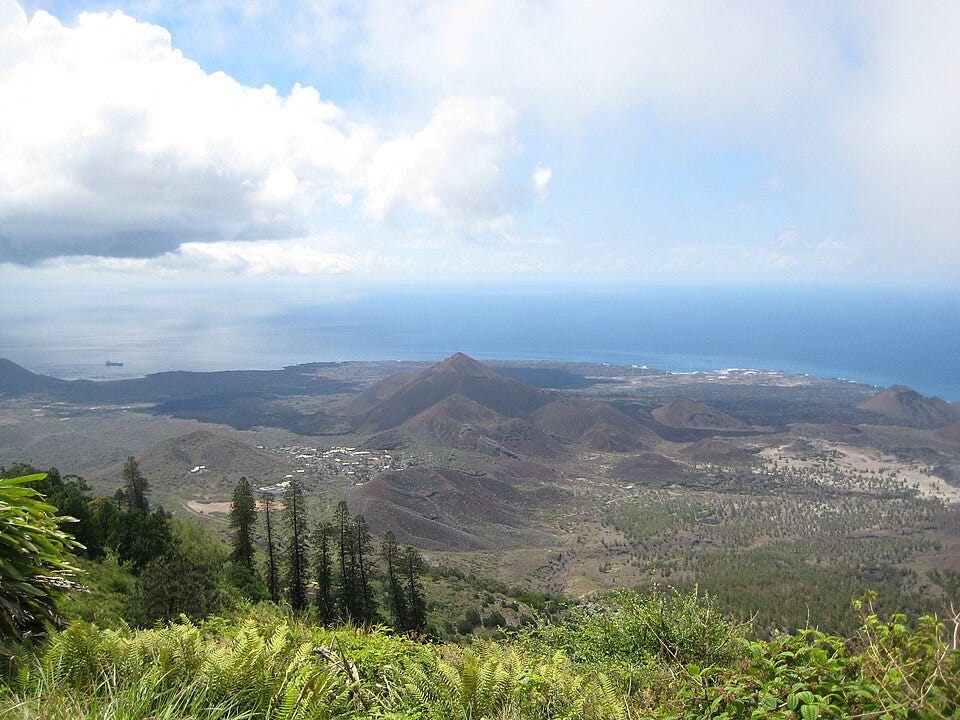
Owner: United Kingdom (British Overseas Territory)
Ascension is basically a barren volcanic rock that the British turned into an ecological science experiment. In the 1800s, Charles Darwin and his botanist friend Joseph Hooker devised a plan to terraform the desolate island by planting a massive, artificial cloud forest on its highest peak to generate fresh water. It actually worked, creating “Green Mountain,” a bizarre, human-made tropical jungle sitting atop an otherwise Mars-like military and communications outpost.
Tristan da Cunha

Owner: United Kingdom (British Overseas Territory)
Tristan da Cunha holds the official title of the most remote inhabited archipelago in the world. Its main settlement, wonderfully named “Edinburgh of the Seven Seas,” is home to roughly 250 permanent residents who share just a handful of surnames and rely almost entirely on subsistence farming and lobster fishing. There is no airstrip, meaning the only way to visit this tight-knit, isolated community is to endure a multi-day journey on a boat that only visits a few times a year.
The Falkland Islands

Owner: United Kingdom (British Overseas Territory, claimed by Argentina)
Floating near the frigid southern tip of South America, the Falklands are a surreal slice of rural British life—complete with red phone boxes and pubs—dropped into a harsh, sub-Antarctic tundra. The islands are famously populated by vastly more sheep and penguins than humans, and the terrain is completely devoid of native trees. Despite this desolate atmosphere, they were the flashpoint of a sudden and bloody war in 1982 between the UK and Argentina, and the lingering geopolitical tension makes them a heavily fortified outpost to this day.
The South Georgia and South Sandwich Islands
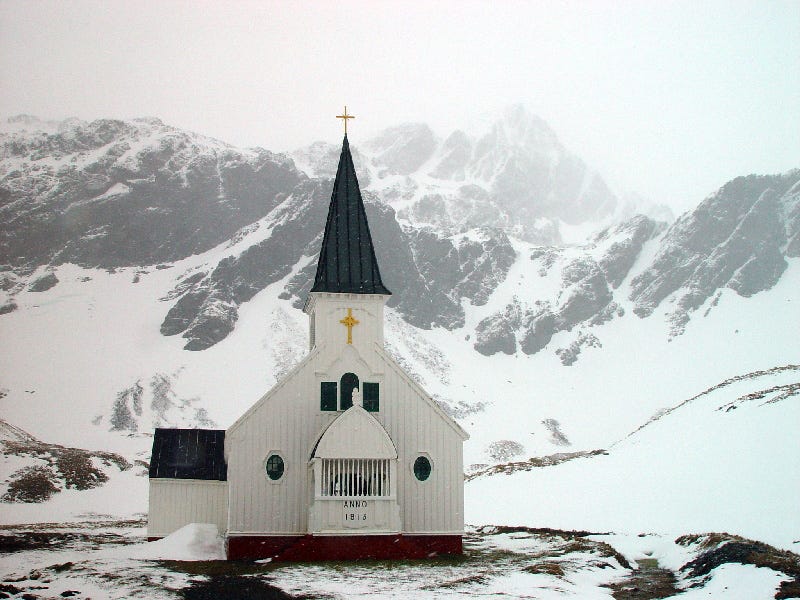
Owner: United Kingdom (British Overseas Territory, claimed by Argentina)
These islands are some of the most hostile, icy, and mountainous pieces of rock on Earth, devoid of any permanent human population aside from a few rotating researchers and government officials. What makes South Georgia incredible is that it is an absolute mecca for wildlife, hosting millions of king penguins and elephant seals that completely overrun the beaches. Towering over these animals are the eerie, rusting remains of massive abandoned 20th-century whaling stations, creating a haunting contrast between returning nature and brutal industrial history.
Have you ever been to any of these islands? If so, let me know what they were like! I’d love to visit each and every one of them someday.
My daughter spent a university summer term in the Falklands (so their winter) doing public history. She helped the museum staff with their oral history collection and researched her own thesis on “Kelper Culture” and its roots in Scotland etc.
Oh my, did I miss the mention of the lovely Jersey and Guernsey? I spent the month of March on them this past March and simply adored their differences. I particulary loved learning about the Nazi occupation history (which I subsequently have written into my novel (due out next month)) and the lovely chapel on Guernsey made of Wedgewood mosiacs. Have you been?