

All hail the (World Cup) newcomers
Four new teams are taking part in the World Cup and that's pretty cool
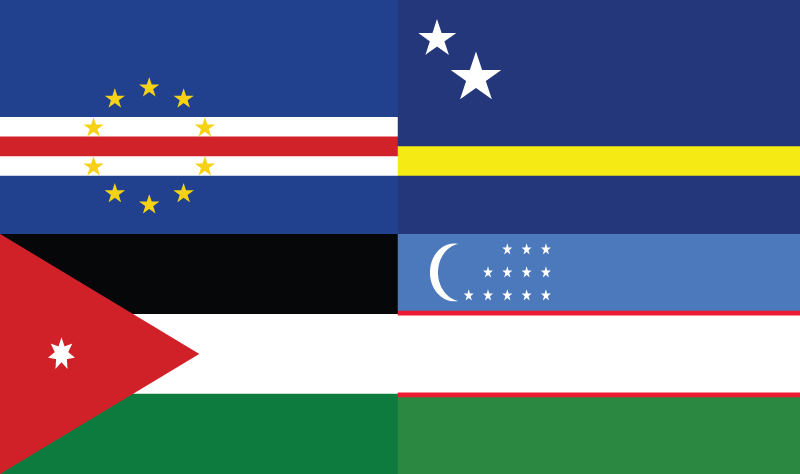
Look I get it, many of you who read this GEOGRAPHY newsletter probably aren’t sports fans. Or even if you are (and you’re from the US or Canada) you’re probably not a soccer (ahem football) fan. But allow for me a minute to talk about the largest sporting event to take place at the moment. Not from a sporting perspective! No, this one is from a geographic perspective.
The world’s largest and most important tournament is happening right now. And yes, I do mean that this is larger than the NFL playoffs and Superbowl. It’s larger than the Knicks winning their first NBA championship in like 5 decades. It’s larger than any Olympics event. This tournament, the 2026 World Cup, is expected to be watched by 5.8 billion unique individuals on the planet. That’s BILLION. We’re all geography nerds here, but to spell it out that’s about 73% of the entire global population that will partake in some form or another to watch the tournament. By comparison, the 2026 Superbowl is estimated to have had a global reach of 225 million. The 2024 Olympics is estimated at around 5 billion total global viewership. That’s huge, but still well below that of the 2026 World Cup.
So, to put it mildly, even if you don’t necessarily care to watch the World Cup, or you’re not a sports fan at all, this tournament matters to so many people that the geographic implications of even being a part of it are staggering. And a large part of this is due simply because of the representation that a tournament like this gives.
Think about it for a second. There are very few ways to earn global recognition as a culture and nation in this world. You have the strictly political ways, of course, through organizations like the United Nations. But while that gives you political recognition, it doesn’t really make an impact in terms of whether people/humans/us/everyone in the world actually know you exist. To do that, you need to have a level of culture, wealth and prominence that makes people sit up and notice that, hey, you exist.
And so, for that reason, the World Cup is one of the great ways in which nations can get that kind of recognition. It’s an event that makes people look up where your country is located, who lives there, what goes on there, what the culture and food is like. For lack of a better term, it’s a HUGE moral booster for any given country that’s taking part in it.
For our story today, I want to dive into the newcomers of the World Cup. If you didn’t know, the 2026 World Cup is the first to feature an expanded tournament. In 2022, the World Cup hosted 32 national teams, but the 2026 is hosting 48. What this means in practical terms is that nations that previously would never have made it beyond the qualifying rounds (the series of games that determines who gets to actually be in the World Cup) are now given a much better chance to be represented. And this has translated into the fact that, for 2026, we have four first time participants:
Cape Verde (aka Cabo Verde)
Curaçao
Jordan
Uzbekistan
And so, to celebrate each of these teams a bit more, I want to do a bit of a deep dive on what makes each of these countries so special and why their representation in the 2026 World Cup matters.
This also means, though, that if you’re a free subscriber, you’re article ends here. ☹️ I do hope you’ve enjoyed the article and why representation matters. And, of course, if you’d like to read more and comment, please consider becoming a paid subscriber!
Keep reading with a 7-day free trial
Subscribe to The Bight to keep reading this post and get 7 days of free access to the full post archives.