


Canada is my favorite country in the world. So much so that I’m gonna through a ‘u’ in that favourite for you all. Don’t get me wrong, I’m a Pacific Northwesterner and Oregonian through and through, but as far as whole countries go, I always feel most at home in Canada. So it’s wild that I’m now having to say things like:
Canada is a free and independent country
Or
I think we should treat Canada like they friend they’ve always been to us
Or even
Canada is not today nor will it ever be a state of the United States
But this is just the world we live in now, I guess. So, in honor of a strong and free Canada, here are 15 of the my very favourite geography facts about the Great White North!
As usual, you can watch this as a video instead.
Most islands in the world

Canada has more islands than any other country, with an estimated 52,000 named islands and countless smaller, unnamed ones. The Arctic Archipelago alone contains over 36,000 islands, including Baffin Island, the world’s fifth-largest, and Ellesmere Island, the tenth-largest. Combined, these islands account for about 15% of Canada’s landmass.
And they’re not all barren Arctic tundras! Prince Edward Island is a whole province and is known for its rolling farmland and beaches, while Vancouver Island and Haida Gwaii feature lush temperate rainforests and towering mountains. But unlike island nations such as Indonesia or the Philippines, Canada’s islands are often remote and sparsely inhabited, making them crucial for scientific research, tourism, and environmental conservation.
The world's longest coastline

Canada has the longest coastline in the world, stretching over 202,000 kilometers (125,567 miles) and bordering three oceans: the Atlantic, Pacific, and Arctic. For perspective, Indonesia, the second-longest, has a coastline of just over 54,000 kilometers. Canada’s coastline is nearly four times longer!
This immense coastline supports vital fisheries, particularly for lobster and crab in the Atlantic and salmon in the Pacific. The Arctic coastline is becoming increasingly important as melting ice opens potential shipping routes like the Northwest Passage. Canada’s coastline also includes famous natural wonders such as the Bay of Fundy, which has the world’s highest tides, rising over 16 meters (52 feet) in a single day.
The second largest country

Covering 9.98 million square kilometers (3.85 million square miles), Canada is the second-largest country in the world, behind only Russia. In fact, you could fit the entire European Union into Canada and still have room to spare. Despite its massive size, Canada has a population of only about 40 million people, resulting in one of the lowest population densities in the world—just four people per square kilometer, compared to the United States' 35 people per square kilometer.
Canada’s vastness encompasses towering mountains, expansive prairies, frozen tundra, and dense forests. This diversity creates extreme regional differences, from British Columbia’s temperate rainforests to Nunavut’s icy Arctic and from Saskatchewan’s flat prairies to Newfoundland’s rugged coastlines.
Most of Canada’s population lives close to the U.S.

Despite its size, about 75% of Canada’s population lives within 100 miles of the U.S. border. This narrow strip of land accounts for less than 5% of Canada’s total area but includes cities like Toronto, Vancouver, Montreal, and Ottawa.
This concentration is largely due to climate and geography. Southern Canada has a milder climate, fertile land, and better access to trade with the U.S. (which I guess mattered more last year than it does today ¯\_(ツ)_/¯). In contrast, the northern regions are dominated by harsh Arctic and sub-Arctic conditions, making large-scale settlement difficult, Calgary and Edmonton aside.
The Hudson Bay: A giant (mostly) inland sea

The Hudson Bay is the world’s second-largest bay, after the Bay of Bengal, covering 1.23 million square kilometers (473,000 square miles). Despite its size, the bay is relatively shallow, averaging just 100 meters (330 feet) deep. It freezes over completely in winter, and even in summer, its waters remain extremely cold.
The bay was vital in Canada’s history as a hub for the fur trade, with early trading posts established by the Hudson’s Bay Company. Today, its shores are sparsely populated, with small communities mainly relying on fishing, hunting, and shipping.
Over 2 million lakes

Canada has more lakes than any other country, with over 2 million, including 31,752 that are larger than 3 square kilometers. Canada’s lakes account for nearly 9% of its total land area.
Among the most famous lakes are Lake Superior—the world’s largest freshwater lake by surface area—and Great Bear Lake, Canada’s largest by volume. Together, Canada’s lakes hold about 20% of the world’s freshwater supply.
Largest freshwater island
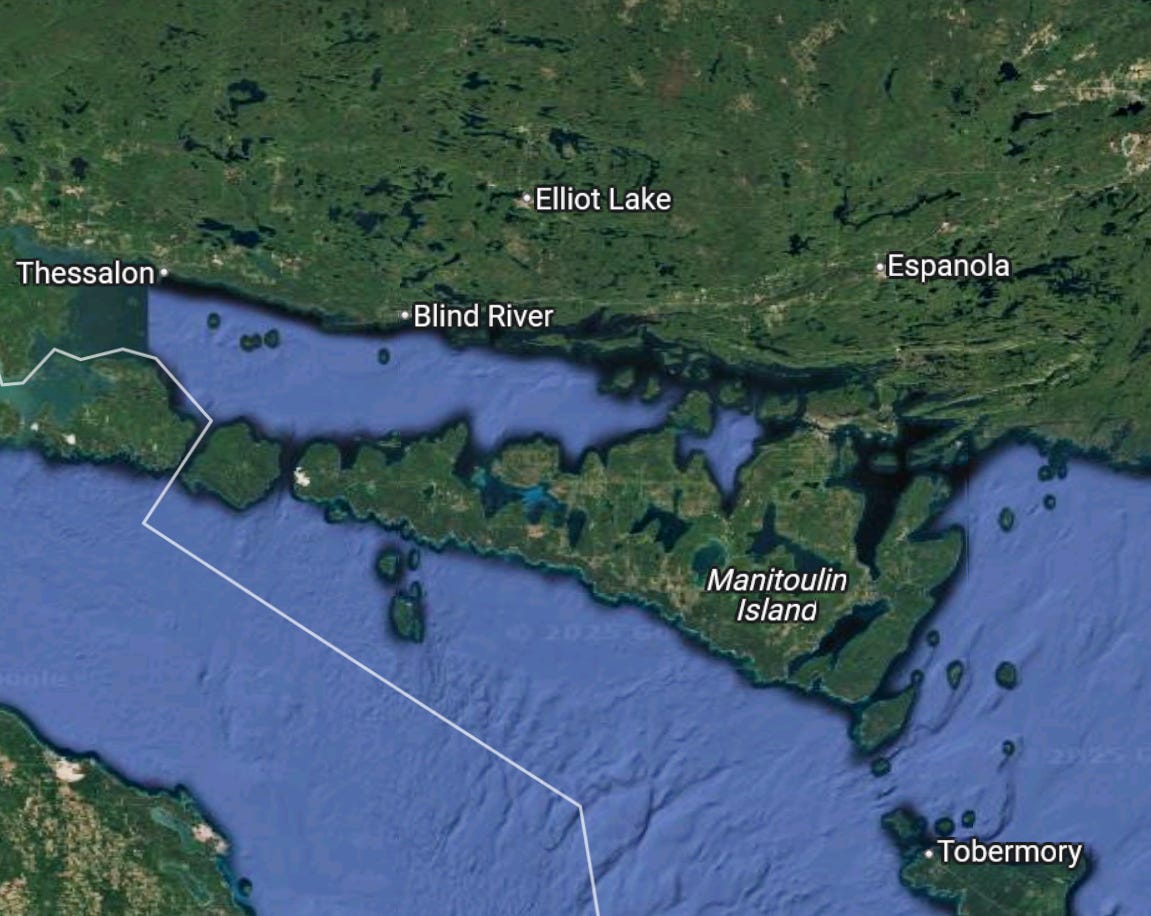
Manitoulin Island in Lake Huron is the world’s largest freshwater island, covering 2,766 square kilometers (1,068 square miles), larger than Luxembourg! The island contains over 100 inland lakes, some of which have their own islands, creating a fascinating chain of landforms.
The Southernmost Point in Canada
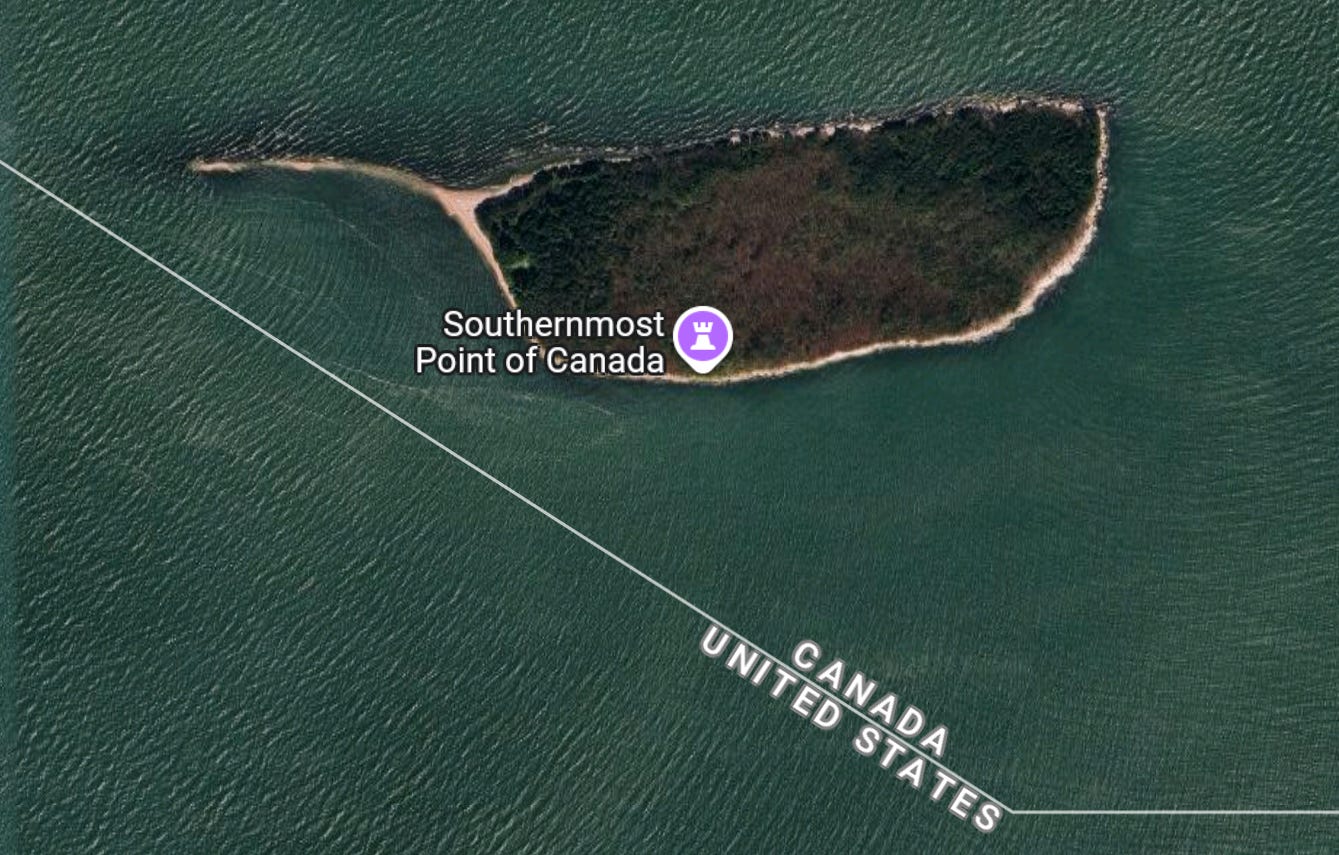
Middle Island, located in Lake Erie at 41.4°N, is farther south than parts of Northern California. While uninhabited, the entire island is a conservation area, and the southernmost populated area in Canada is nearby Pelee Island.
The vast boreal forest
Canada’s boreal forest is one of the world’s largest intact forests, covering 2.7 million square kilometers about 35% of the country’s land area. It plays a crucial role in carbon sequestration and supports diverse wildlife, including moose, lynx, and billions of migratory birds.
The world’s oldest rocks
Canada is home to some of the oldest rocks on Earth, dating back nearly 4 billion years. The Canadian Shield, a massive geological formation, contains rocks in Quebec’s Nuvvuagittuq Greenstone Belt that are believed to be 4.28 billion years old. This ancient landform is also rich in minerals, fueling Canada’s mining industry.
Canada’s great divide
Canada’s section of the Continental Divide runs through the Rocky Mountains, separating watersheds that flow into the Pacific, Atlantic, and Arctic Oceans. In British Columbia and Alberta, the divide creates a dramatic barrier that influences weather and ecosystems.
Nunavut: The largest territory
Established in 1999, Nunavut spans 2 million square kilometers—nearly the size of Mexico—yet has only about 41,000 people. It is primarily inhabited by Inuit communities and features breathtaking Arctic landscapes, including Baffin Island and the fjords of Auyuittuq National Park.
Mount Logan: Canada’s highest peak
At 5,959 meters (19,551 feet), Mount Logan in Yukon is Canada’s tallest peak and the second-highest in North America after Denali. The mountain is still growing due to tectonic activity and has the largest base circumference of any non-volcanic mountain.
Canada is a surprising oil powerhouse
Canada ranks among the world’s top oil producers, holding the third-largest proven oil reserves globally, mainly in Alberta’s Athabasca oil sands. While a major economic driver, oil extraction here is also an environmental challenge due to high carbon emissions and ecological impact.
A country of time zones
Canada spans six primary time zones, from Pacific Time (UTC-8) in British Columbia to Newfoundland Time (UTC-3:30). Newfoundland’s half-hour time zone is a rarity shared by only a few places worldwide.
This time diversity presents logistical challenges, particularly for national broadcasts and political events, which often cater to Eastern Time. When Vancouverites wake up, Newfoundlanders are already well after lunch!
—
Stay strong and free Canada! You’ll always have a friend in me. 🍁
Oh Canada !!!
We actually spent our honeymoon in Nova Scotia which marked a Great Leap Forward in understanding the arc of history leading to what is now Canada, and ancestry.com persists in showing me ancestors who passed through or came down from Canada to join my family tree (who stuck persistently for generations to old New England and the Old Northwest)